Words do get in the way–do watch them. -Michelle Liew
📤📥📤📥📤📥📤📥📤📥📤📥📤📥📤📥📤📥📤📥📤📥
“Watch those darn words,” groused Mavis, Spencerfield’s angsty mouthpiece and elementary school teacher. Townsfolk believed she was just eccentric, always on a language crusade as if these would end in grail findings. “Words stick. Words stew.”
She became the town’s tact police after its mayor corrected her grammar in front of the townsfolk–again. The town ignored the nagging shenanigans–and Mavis.
That is until a conversation with an errant student. “Well, bless your father–and his slippery hands.”
The next morning, the mayor was new. And Mavis? She became the school’s principal.
Anger is a kite—it must be tethered. Michelle Liew
🎏🪁🎈🪁🎏🎏🪁🎈🪁🎏🎏🪁🎈🪁🎏🎏🪁🎈
11-year-old Benji Lim shifted in his seat, his fingers twitching behind his desk. Scrawling a quick note to the classmate behind him was a little too hard to resist.
“Want to trade–“
He was halfway through his note when Ms. Tan’s shadow hovered over his desk. She didn’t flinch, but sighed as if she’d already had the detention bed-and-breakfast booked in advance.
“Benji, detention. An hour after school. No excuses this time.”
Benji’s mouth worked faster than his homework ever did.
“Go fly a kite!” Before he realised it, his feet were carrying him out of the classroom.
The detention room was his sanctuary for the rest of the afternoon. He found Aunt May hovering at the door of the apartment they shared after his mother lost her battle to lung cancer.
“You told your teacher to fly a kite,” Aunt May’s brown eyes held a wealth of meaning. “You’ll do just that. “
She handed Benji a lopsided, dusty fish-shaped kite that had rested in the utility room for a number of years. It was uneven, and caked with dust—like him.
“You’ll go to the field, and get that up there.” Aunt May’s words had him making his way to the door.
He took off to the nearby beach, his feet like a soldier’s performing an ill-timed march past. Palm fronds met the ground, but no matter what he did, the kite refused to lift.
A boy, a few years younger than himself, was flying a giant,self-made dragon kite—with the polished ease of someone twice his age.
“Can I help you?” He offered, watching Benji tussle with the kite like it owed him money.
Benji scoffed. “What’s the big deal? It’s just a stupid kite.”
The boy simply took his kite and offered a quiet smile. “Only if you don’t know how to fly it.”
With the practiced arm of a competitive expert, he simply tethered the kite to a nearby sign that read “BEWARE OF GUSTS.”
By a miracle of boyhood physics , the kite took to the air, tethered and leering. A squirt? Showing him up? His friends would have a field day on social media. He took the cumbersome kite off the tether —it nosedived, dragging Benji like a toddler holding a leash resistant pup.
The little boy shook his head, and once more tied Benji’s kite to the sign. It wobbled—it had no idea where it wanted to go. WIthout a word, the boy flew his dragon, his hands a steady Jackie Chan’s, stunts in panoramic loop.
Then both kites were in the air, syncing in a windswept dance. To his surprise, Benji felt lighter. The wind didn’t just tame the kite—it carried him along with it in a beautiful arc.
So it was two kites. Against the wind. Both winning.
Benji had a fleeting glance at the dynamic duo, charmed by their danceathon. He looked down, looking for the boy—but he had vanished.
In his place, taped to the sign, a neatly-written note.
“Go fly your kite again. But this time, tether it.”
Benji grinned.
🎏🪁🎈🪁🎏🎏🪁🎈🪁🎏🎏🪁🎈🪁🎏
If you liked what you read, please join me on Patreon!
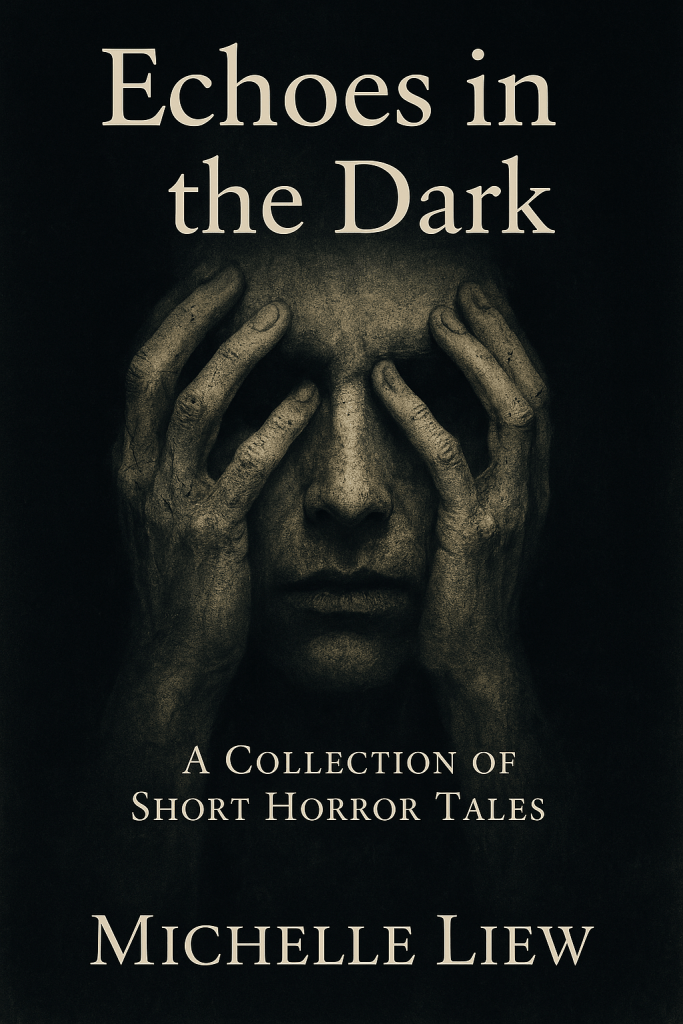
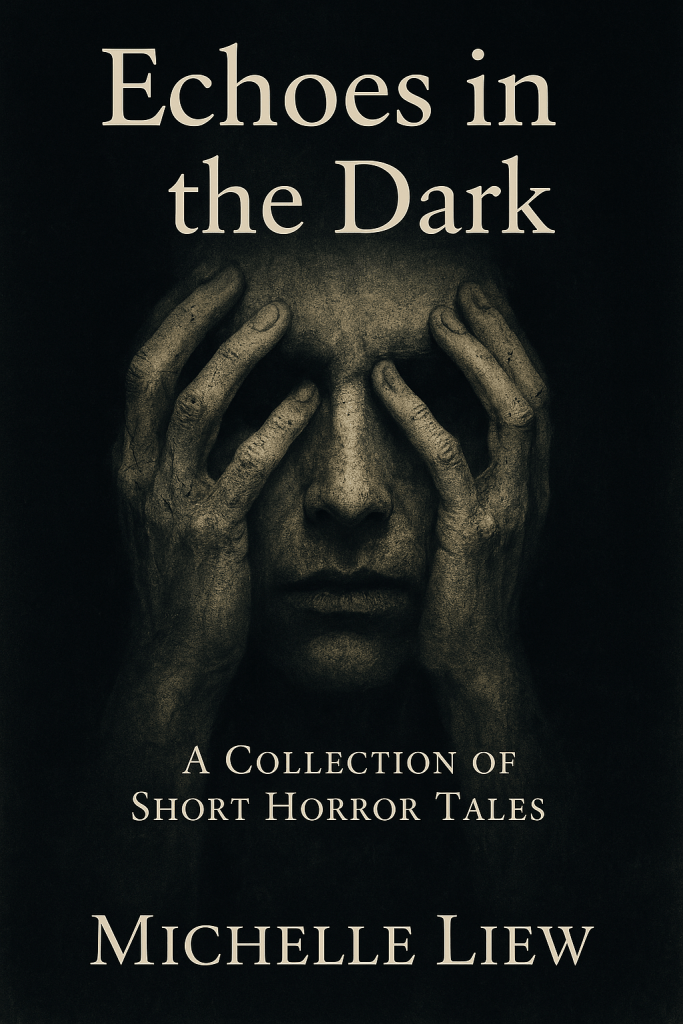
Please find my ebook of horror microfiction, Echoes in the Dark, free for download here.
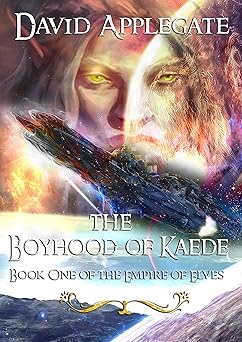
Please check out other amazing authors on Amazon! Today’s book is The Crazy Between Us by Eric Pellinen
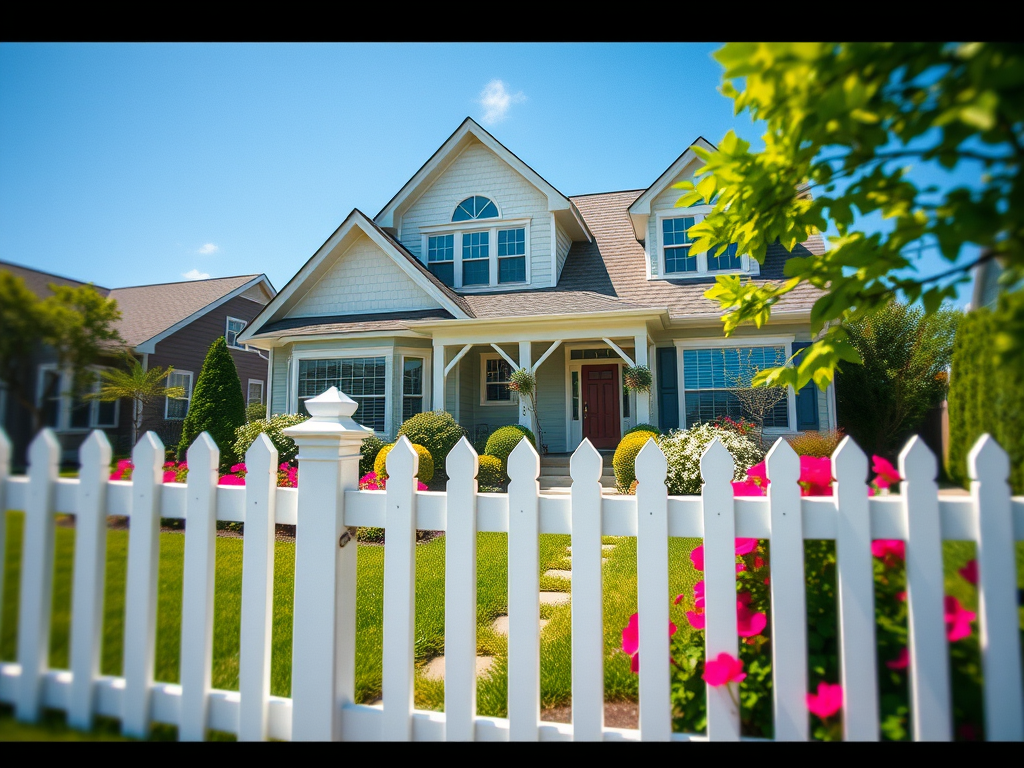
Marigold Lane was quiet–peaceful, picturesque. A place where parents wanted their children to take root. Grow up.
Where decent family values were held dear.
The Blackstones —unflappable, champions of the status quo—arrived to complete this idyllic suburban scene. No one knew when they got to Marigold–they simply appeared, as if their house had grown them.
Not a sound came from the house. No creaks, no odd moans. But it was as if it had grown the Blackstones. They didn’t blink as often as the rest of us. Unassuming and polished as they were, they were—too perfect. Too still. Too calm.
A little too stoic—for me.
🏡 🏠 🏘️ 🏚️ 🏡 🏠 🏘️ 🏚️ 🏡 🏠 🏘️🏡 🏠 🏘️ 🏚️ 🏡 🏠 🏘️ 🏚️
Our white-picket-fence neighbors began to engage—but always held enough back. Baked goods, in neat packaging, left quietly on our patio. Greetings, in well-rounded cursive. Prettily wrapped presents on birthdays,never late, never early, always remembered. Family meals, seen through the curtain, played like well-synchronized scenes from Family Ties.
I chalked it up to envy. They had what everyone in the neighbourhood wanted—an idyllic home, that charming white fence, a car.
Money.
But something felt–off. Their children looked the same the next year. And the year after next. Their dog? Too quiet. Mum was too slim. As if she had never seen a plate. Dad always smiled. Always. Never in a foul mood.
🏡 🏠 🏘️ 🏚️ 🏡 🏠 🏘️ 🏚️ 🏡 🏠 🏘️🏡 🏠 🏘️ 🏚️ 🏡 🏠 🏘️ 🏚️
We got THE invite for dinner. And we walked over. Their table was as they were—well-laid. Plates well aligned, forks and spoons sitting like quiet Terra Cotta warriors.
Dinner was a well-played march past, with dad always smiling. He passed the bread around like a conductor disciplining his choir. Every gesture at the table was—terrifyingly synchronized. “Children make mistakes,” Mr. Blackstone said in a melodious tenor. “Mistakes are lessons,”he said, as if reading from a music score.
All of us spoke in well-cadenced, gentle tones,our responses too well-timed. Too precise. Their laughter felt rehearsed, expressions from actors who didn’t sync with scenes.
And then the questions came. Oddly personal queries for a neighborly relationship.
“Do you think family is sacred?”
“Are you comfortable with someone watching you?”
Then, the toast, at just the right moment. “To unity, obedience, and harmony.”
A glass shattered, its tiny fragments showing Mr. Blackstones smiling reflection.
In different places, all over the floor.
🏡 🏠 🏘️ 🏚️ 🏡 🏠 🏘️ 🏚️ 🏡 🏠 🏘️🏡 🏠 🏘️ 🏚️ 🏡 🏠 🏘️ 🏚️
But not for long, courtesy of Mrs. Blackstone’s helper, dressed in neatly pressed servant’s attire. Everyone finished the meal in unsettled silence.
Mrs. Blackstone and her helper strode into the dining room in unison, carrying a cake, already sliced in perfect pieces.
My eyes fell on a photo on the wall. Everyone was there—including myself.
I stared at the dessert plate in front of me. I smiled, like everyone else. Lifted my fork, like everyone else. Chewed on the cake, like Mrs. Blackstone. And smiled, like dad.
🏡 🏠 🏘️ 🏚️ 🏡 🏠 🏘️ 🏚️ 🏡 🏠 🏘️🏡 🏠 🏘️ 🏚️ 🏡 🏠 🏘️ 🏚️
If you like what you read, please join me on Patreon!
Please find my free book of Horror Stories, Echoes in the Dark, free for download here!
Do check out books by other great authors on Amazon. Today’s book is Upside Down Abandoned Heartstrings, poetry by (Rev.) Romulus C. Kulik Draco
30-year-old Callie Lum tried to sit up in bed on April 17, her limbs mushy and uncooperative. She marked Blah Blah Blah day the same way each year–by ignoring it. Feigned ignorance made it easier for the overwhelmed, caffeine-fueled woman to cope.
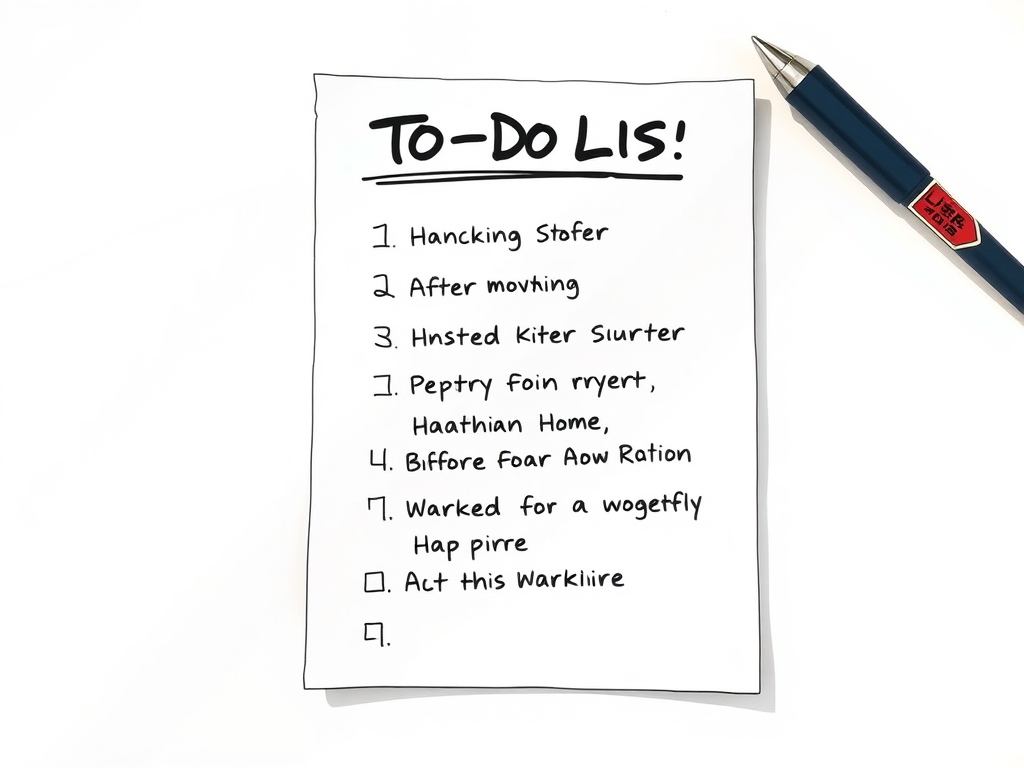
Years of nagging from well-intentioned friends and family birthed a crumpled list, which Callie kept locked in a drawer. It was a handwritten litany of things she’d never do—call her mother. Be positive. And her favorite: Get a real job
Advice was a recipe she never requested–or intended to cook. The list wasn’t just a to-do list–it was her survival script.
When she tugged the drawer open that day, it wasn’t there. Her eyes, bloodshot from lack of sleep, scanned the room, half-expecting it to leap out at her.
And found it pinned on the refrigerator door. Like it belonged there. By a magnet she didn’t own—or recognize. The ink on it was fresher. The handwriting on it seemed to be hers…but more polished, with a crossed-out line, like a task had been completed.
This was a to-do list that everyone loved–tasks disappeared from it daily, whether Callie did them or not. Then, the calls. She heard her mother’s voice, crisp and matriarchal: “Next.”
This is to bless Mikeydred’s April Challenge with a few cool showers.
Honesty involves a little drizzle—and some courage. —Michelle Liew
☂️🌧️☔🌂☁️☔🌧️☂️🌧️☁️☂️🌂☔☂️🌧️☔🌂☁️☔🌧️☂️🌧️☁️☂️🌂☔
In Everdrizzle, the rains knew no schedule–they fell, and simply stayed. Mira Weather, a whimsical ‘emotional meteorologist’, read emotions the way true weather girls read maps. The town looked forward to her forecasts every April Fools Day—not for their quality or accuracy, but for a few laughs.
This year, Mira’s forecast wasn’t that funny–it was more of a dare. Her board read: “Heavy truths expected. Have courage. And maybe some cake.” The confessions were a mere drizzle; a little wet, but harmless.
That is, until odd confessions came to the surface. They started with small truths that could be lapsed into silence. “I cheated Mrs. Grimm of five cents,” a shopkeeper admitted. “I stole a library book,” admitted a dishevelled teen. A neighbour admitted, “I pretended to like my neighbour’s podcast—for four years.”
The truths did break hearts–but in the best way. People cried in public, except for stoic Bob, who pretended to be his shoe for five minutes. Grudges dissolved. Marriage proposals made impulsively were called off with relief. People cried in public–but no one looked away.Except Bob, who pretended that his shoes were wet from the rain for about five minutes. The air was dense, not with doom, but with clarity.
Mira forecasted the truth–then vanished like mist. No one saw her leave, but everyone felt her echo. In her place was a wax-sealed letter pinned to the town’s bulletin board. “The noise of April showers makes it easy to lie about the little things,” it read. “But you will tell the truth–without the background noise. Have courage. Also, please water my plants.”
The rain never stopped falling. Neither did the truths. The villagers forecast their own fates–with small acts of honesty, year round.
Despite the rain, their heavy days grew lighter.
So Mira reshaped her forecast: “Forecast—showers of blessing. Trust your own skies.” She gave them the weather, but the climate was of their own choosing. “It was never about the weather,” she said. “It was about the courage to be honest.”
☂️🌧️☔🌂☁️☔🌧️☂️🌧️☁️☂️🌂☔☂️🌧️☔🌂☁️☔🌧️☂️🌧️☁️☂️🌂☔
This work is entirely original. Any AI tags are coincidental.
If you like what you’ve read, do join me on Patreon!
This is a collection of my horror stories, Echoes in the Dark, free for download here.
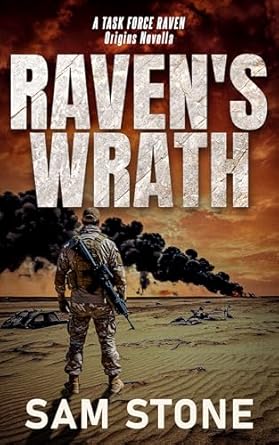
Please check out books by other amazing authors on Amazon! Today’s book is Raven’s Wrath by Sam Stone







 The Getting Literal Writing Alcove