In the sky kingdom of Aviar, feathers weren’t just fashion-they were the rule of law. Lord Vantrello was a peacock – a flamboyant figure. a shining star of Aviar’s aristocracy, he strutted about with bejewelled plumes turned Aviar and envious green. His feathers weren’t just ornate–they were his kingly decree.
Lord Vantrello had a reputation for strutting around the otherwise peaceful kingdom and declaring war on anything less than vibrant. All birds had to bow to beauty–or else. Pride was the currency in Aviar—and Vantrello was the richest. He was no ruler–just colourful plumes layered with scorn.
Nim was Aviar’s outcast–a plain Eurasian sparrow with feathers a shade of dull brown. But that plainness was anything but.
“One’s true worth lies beyond plumes,” was his gentle chirp.
That was the affront that sent hate waves through Vantrello’s feathers. He declared a public Challenge of Radiance, giving each bird just one short day to display their finest regalia/ He who collected the crowd’s loudest cheers won.
The air in Aviar soon shimmered with vibrant feathers, with all birds flaunting prideful plumes in struts.
All except Nim. In gentle defiance of Lord Vantrellos’ dazzling status quo. He brought with him–
Nothing.
So it was that Vantrello stood, a vibrant fan of shimmering plumes.
Pilfered. Yet beaming in their forbidden hues.
Nim just stood, sans feathers, save one quill from his supportive mother.
Given with the love she dared not voice.
So it was–a crown of prideful regality versus a crown of gentle defiance. One shimmered, the other spoke brilliantly–without words. Pride shone. But humility endured.
The phoenixes flew in, donned in pilfered feathers. With quick swishes, they reduced Vantrello’s throne to molten ash.
They turned to Nim.
Who had nothing to prove. Everything to teach.
Nim never ruled over Aviar. But he had followers, drawn to kingship without spectacle.
In his dull, yet gentle wings, quiet wisdom flew.
Bright plumes fell, and truth landed.
🪶🪶🪶🪶🪶🪶🪶🪶🪶🪶🪶🪶🪶🪶🪶🪶🪶🪶🪶🪶🪶🪶🪶🪶🪶🪶🪶
If you like this story, do join me on Patreon! Buy this blog a coffee — it keeps the words flowing and the lights on! ☕Your kind donation via Paypal would be greatly appreciated!
Please find a book of my horror microfiction, Echoes in the Dark, free for download here.🪶🪶🪶🪶🪶🪶🪶🪶🪶🪶🪶🪶🪶🪶🪶🪶🪶🪶🪶🪶🪶🪶🪶🪶🪶🪶🪶
Dance steps still echoed through the halls of Encore Dance Studio, flowing with the eerie rhythm of the chandeliers.
Only shadows moved beneath them, synced to the charming, yet poignant chorus of the Blue Danube. It flowed through the vacant halls, a tune drenched in memory, donned like a ghost’s lullaby.
From a forgotten music box in the corner, the tune whispered, a shattered musical promise, fragile as glass. It whispered, not a melody, but a beckoning.
Young Johann discovered it carefully buried beneath a loose floorboard. He wound it—he believed it offered comfort.
Curiosity won- it spawned Johann’s tune, its notes a web of silk threads winding around him in a cocoon.
A dark shadow danced with the blissfully unaware Johann, shifting and stretching, ever-changing.
And she appeared–pale, gaunt, hollow eyes filled with yearning. She extended a frail hand.
Thinking it would lead him to a land of wonder, he took it.
Her grip was ice, hard, fastidious.
It wouldn’t let go.
So he danced with her–and danced, passing between light and dark, slowly fading as he moved.
As they danced, she told him his name.
She bore his surname.
She had been a top dancer at Encore–bright, graceful, envied.
But she had vanished beneath the floorboards—they say he had pushed.
The three shared the same surname.
The two flowed with the melody, without stopping—until Johann no longer existed.
Just his movements. Only his memories.
He had taken her hand without question. He trusted it–they shared the same surname.
Now a mere shadow, he lurked beneath the floorboards. All because he followed, without asking where.
The music box still waits under the floorboard, waiting to be opened.
Not every hand leads the right way.
🩰🩰🩰🩰🩰🩰🩰🩰🩰🩰🩰🩰🩰🩰🩰🩰🩰🩰🩰🩰🩰🩰🩰🩰🩰🩰🩰
🩰🩰🩰🩰🩰🩰🩰🩰🩰🩰🩰🩰🩰🩰🩰🩰🩰🩰🩰🩰🩰🩰🩰🩰🩰🩰🩰
If you like this story, do join me on Patreon! Buy this blog a coffee — it keeps the words flowing and the lights on! ☕Your kind donation via Paypal would be greatly appreciated!
Please find a book of my horror microfiction, Echoes in the Dark, free for download here.
Chloe flung the door to room 721 open, eager to rest her blister-ridden legs on an available bed. It was usually not easy to get anything past her–sharp as a tack, she’d actually noticed that 721 wasn’t on the booking list. But she was simply too jet-lagged to care. The bellhop’s lacklustre posture said it all–it probably wasn’t a great room, but sufficient for a night’s needed shuteye.
“No record of your booking, ma’am, but there’s a key waiting.” He paused, and eyed her keenly. “That room isn’t usually booked–but always seems to have a guest.”
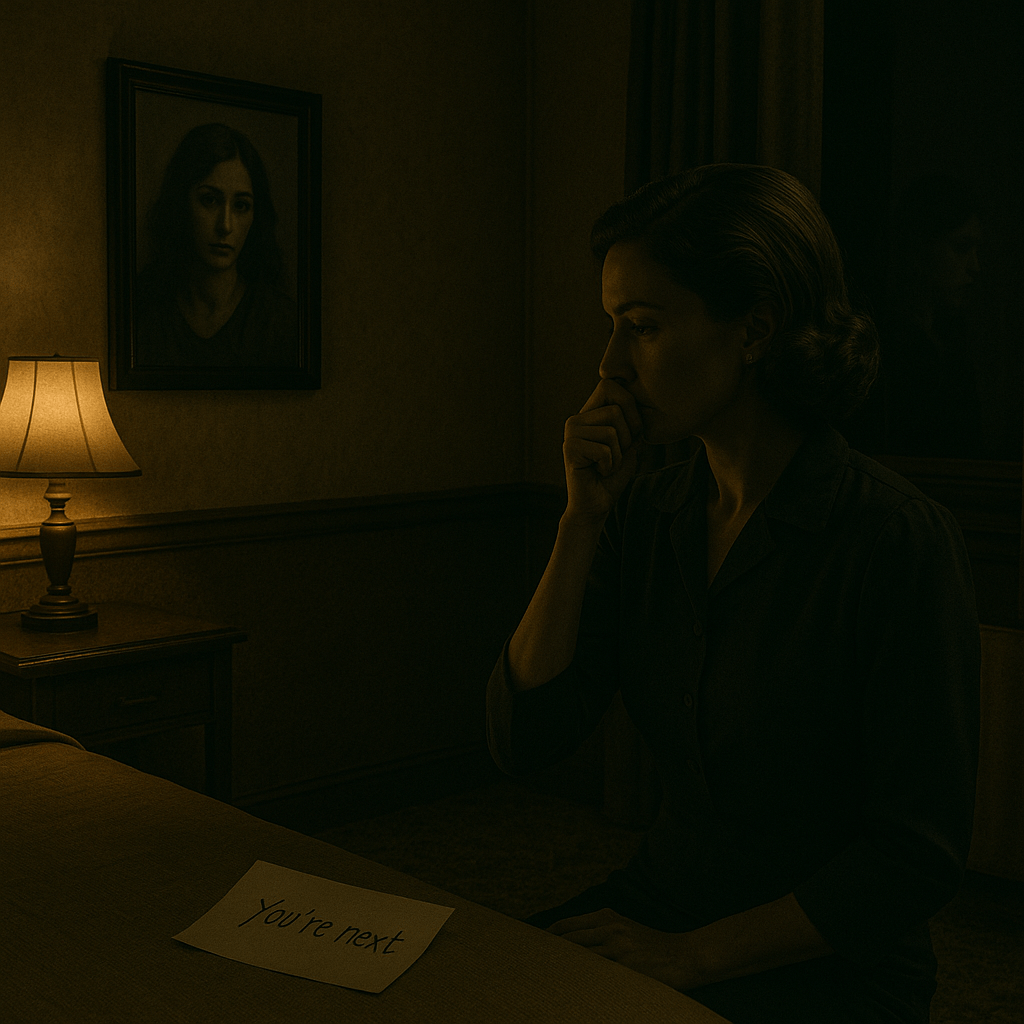
The lights of 721 were starved of electricity–the yellow light wasn’t possible to read by. A musty, old carpet reeked of cigarette smoke–Chole covered her nose with her hand. A photo of a woman caught her eye–she had grief etched in her gaze. She stared out the hotel room’s window, her thoughts flooding her dark cavern with misplaced echoes.
Exhaustion won. The intrepid journalist was far too tired to bother about the room’s habitation standards. Her head touched the pillow…and something changed.
When she woke, she wasn’t in bed. But in the photo.
Her hand, unmistakable, holding the camera. The flash must have gone off.
The camera sat on her chest when she woke, humming softly.
And a note. Fluttering loosely. “You’re next.” Was scribbled in backward ink.
She couldn’t remember penning the smudged detail…but it was hers.
Chloe grabbed the room key and stuffed her overnight clothes into her bag, hands groping everywhere. Her feet rushed her to the receptionist’s desk.
“Hi Miss, do you want a room?” The receptionist on duty was the same as the night before.
Eyes wide open, she placed the room key on the desk. The receptionist flipped it over to check the tag. “Miss, did you take the wrong key? There’s never been a Room 721.”
Chloe grabbed her bag and turned to leave—and her eyes caught sight of a Bulletin Board with photos: “Missing guests of Room 721–for archival. Do not reassign.”
Among them was one–of her. Taken years earlier, at the beach, just before the Tsunami hit.
🚪🔑🚪🔑🚪🔑🚪🔑🚪🔑🚪🔑🚪🚪🔑🚪🔑🚪🔑🚪🔑🚪🔑🚪🔑🚪🔑🚪🔑🚪🔑🚪🔑🚪
🚪🔑🚪🔑🚪🔑🚪🔑🚪🔑🚪🔑🚪🚪🔑🚪🔑🚪🔑🚪🔑🚪🔑🚪🔑🚪🔑🚪🔑🚪🔑🚪🔑🚪
If you like this story, do join me on Patreon! Buy this blog a coffee — it keeps the words flowing and the lights on! ☕Your kind donation via Paypal would be greatly appreciated!
Please find a book of my horror microfiction, Echoes in the Dark, free for download here.
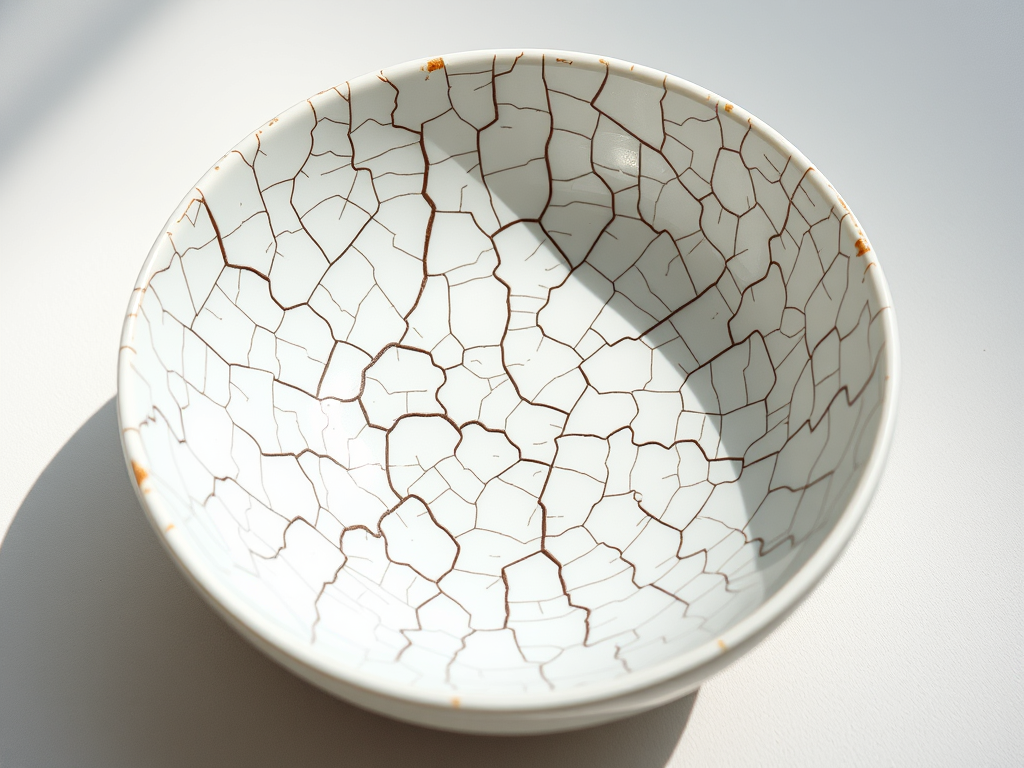
Cracked bowls are often better than polished porcelain ones.—Michelle Liew’s tattooable of the day
💔✨🍵🪄🌿💔✨🍵🪄🌿💔✨🍵🪄🌿💔✨🍵🪄🌿💔✨🍵🪄🌿💔✨🍵
Cedarvale was a suburb haven in full bloom—picture postcard perfection. Clover Wen was the idealist greeting card writer —her ‘just so’ attitude could put Marie Kondo to shame. Her kitchen towels were on rotation. Her cupboards—colour coded. And her spice rack? Alphabetized.
But the idealist had a creative secret—she was the pen behind a famous authentic lifestyle influencer.
It was her comfort zone—it was where she could chase her curated influencer dreams—everything crafted twice over—without the fear of cosmetic judgement. It was where she could hide her fear of blandness—coming out as a lifestyle influencer too ‘jigsawed’ to show herself.
But Clover’s life was a postcard lie—even hardy clovers wilted when over-watered.
Among her pastel promo drafts was a threatening note—one penned in her style, demanding that she confess her ghostwriting exploits or risk losing the utopian life she had sculpted in Cedarvale.
And so began her frantic search for mano sinistra—the evil maestro who composed the note. Perhaps it was Philomena—the cheeky handwriting analyst neighbour would pen something like that. Or her mother—the old one was lost in filters and fonts. He or she had baked clues into the thousands of drafts in what was now a crime scene—a compost pile of tattered ideas.
She filtered through the torn leaves of mental sparks—her mind an un-Cloverlike, confused warp. It was about to spin beyond control when it hit her–the mano sinistra was none other than herself. Her Breakdown—made of half-eaten cake and drafts— had penned it in a hurry, one her well-honed self was too ready to deny.
The handwriting was hers—because her porcelain finish had cracks. She had been the one yelling Mayday. The mano sinistra was herself.
And she hit a jarring note—the only way to ease the chaos in her too-right self was to publish the note. And she did. In all its messy honesty. Philomena winked her support. Her mother gave her a hug.
And her authentic lifestyle influencer gave her his blog. It turned out that cracked bowls sold better than polished porcelain ones.
Now Clover still writes—but embraces off-page scripts when they blend in.
💔✨🍵🪄🌿💔✨🍵🪄🌿💔✨🍵🪄🌿💔✨🍵🪄🌿💔✨🍵🪄🌿💔✨🍵
If you like this story, do join me on Patreon! Buy this blog a coffee — it keeps the words flowing and the lights on! ☕Your kind donation via Paypal would be greatly appreciated!
Please find a book of my horror microfiction, Echoes in the Dark, free for download here.
Total stillness. No chaos. No strife. Perfection. That was Peiying, where citizens long embraced the art of calm. The city’s goal? Harmony. Everything was a well-crafted hourglass—life, actions, emotions. Feelings fled like gazelles in the eyes of prey. The pain of loss was nonexistent. Happiness was archaic.
17-year-old Lian, a citizen of neighbouring Harmonia, had secured the ultimate guide to discovering stillness–a state-sanctioned reflection journey to Peiying. The city met his youthful expectations–beautiful, serene, still. But its people seem strangely—distant. There was no joy. No sorrow. Just an odd, stoic vibe that seemed–too precise. Too practised.
🪷🪷🪷🪷🪷🪷🪷🪷🪷🪷🪷🪷🪷🪷🪷🪷🪷🪷🪷🪷
Lian’s youthful feet took her through the centre of Peiying, its skyline well-crafted, as if painted by automation. Buildings were all perfectly shaped, sized, and aligned. Caretakers had given the trees in the park a precise manicure–their leaves were same-sized and aligned, cut by the same mould.
But it wasn’t–right.
A mother in the park sat on a bench, smiling. Her eyes blank as her arms went limp. Her baby slipped. She did not blink. The soft thud of the baby on the floor drew no glances.
In another corner was a group of friends, greeting each other–but in the sing-song hellos between strangers. Intoned, not spoken. Memorized, not meant. People passed her, their expressions unchanged–they seemed to have forgotten how to address the world.
There was no conflict. No argument. But there was also no joy. No laughter.
They were calm. Calm. Still. Soulless.
🪷🪷🪷🪷🪷🪷🪷🪷🪷🪷🪷🪷🪷🪷🪷🪷🪷🪷🪷🪷
With the too-structured forms of Peiying’s people weighing heavily on his mind, Lian made his way to the library at the town’s centre. The librarian, without skipping a beat, greeted him with a smile carefully etched on her face. She pointed stoically to the archives as soon as she saw him.
“Welcome to the Republic of Peiying’s library. You’ll find everything about the city documented here.”
The tall, neatly installed bookshelves imposed overwhelmingly–they complemented a city attuned to the idyllic. Books, all the same size, were bound in the same fresh leather. Etched on the librarian’s face was a smile — peaceful, but manufactured.
Unreal.
Peiying was harmonious. Peace reigned with an absolute sceptre. But it was a sceptre that wielded so much control that the city was no longer alive.
🪷🪷🪷🪷🪷🪷🪷🪷🪷🪷🪷🪷🪷🪷🪷🪷🪷🪷🪷🪷
On one of the painstakingly aligned bookshelves sat a leatherbound ledger, its contents waiting to wrap a mind in a shocking grip.
And shock Lian they did. One ghastly entry after another.
Mai: “I gave my heart to see the sunset.”
Jun: “My child had my soul–but I cannot feel his heart.”
Mother: ” It was my mind for my child…but her smile never reached her eyes.”
Peiying’s citizens had betrayed their hearts–for peace. It was a Surrender for Desire–each of them had unquestioningly folded their emotions into tightly sealed envelopes, leaving their hearts empty for peace. There was calmness–with endless space. Perfection had led to a life without meaning. No joy. No sadness. Just…blankness.
The city hadn’t crumbled–but its soul had. They found absolute peace—but abandoned life. Stillness—at the cost of emotion, connection and experience.
Peiying had indeed created life–one that was empty.
🪷🪷🪷🪷🪷🪷🪷🪷🪷🪷🪷🪷🪷🪷🪷🪷🪷🪷🪷🪷
But the city’s lifelessness had triggered life within Lian. He needed to inject a new existence in Peiying—shatter its numbness.
In a way that teenagers knew how.
The youngster became a one-man rock band, shouting, dancing and singing in the town square, hoping that his monkeyish antics would spark life. He cried. Recalled fond memories.
“You used to hold concerts here in this square. Mothers would push their babies in their prams, cuddling them when they needed comfort. Remember the laughter? It used to fill the park. Soak it with its warmth. Where is it now?”
He spoke to each citizen he came across, trying to connect, but the poker faces of the citizens remained unchanged.
“I know that feelings are not allowed.” Lian’s frustration broke through his voice. “But you’ve lost the very thing that makes you—-human.”
All was quiet in the square—then sounds of sobbing. Soft mutterings of agreement swept through it, a sound unheard in years. Someone recalled a moment of joy.
“Grandma and I loved the ice cream here.”
The emotion was subtle but poignant.
Peiying wasn’t dead—the laughless city was starting to stir.
🪷🪷🪷🪷🪷🪷🪷🪷🪷🪷🪷🪷🪷🪷🪷🪷🪷🪷🪷🪷
Then, a pedantic buzzing sound as his voice echoed the town square. Drones whirred around Lian, stirring the otherwise dead air. Then guards flooded the area in a quiet march, each of their faces locked in a peaceful, warped smile. They pinned Lian’s limbs down with mechanical precision.
The weeping stopped. The citizens watched, faces reverting to their practised, plastered smiles.
The guards throw Lian into a cell fashion from pure glass and steel–Peiying perfection, sterile and cold. Cameras blinked at each of its corners and at the ends of the corridors outside each one. There was no sound. No human voice. Just the persistent hum of the ventilation.
The prison wasn’t meant to punish–it was built to erase.
Dissidents who protested against peace.
Like him.
Lian felt drowned in the sea of idealist stillness–yet fiercely alive. The rebellious beat of his heart was a fierce drumbeat. They wanted him still, blank.
He threw a single punch on the wall–not out of anger, but defiance. The sound of gentle laughter started in his chest–a rebellion against artificial silence.
Then it became louder.
And it formed a crack- tiny, almost invisible–against the glass.
🪷🪷🪷🪷🪷🪷🪷🪷🪷🪷🪷🪷🪷🪷🪷🪷🪷🪷🪷🪷
Lian stood in his cell of glass and steel, the sterile environment stifling his breath. Peiying’s perfect structure pressed down on him–hard.
The guards arrived, swinging their arms with mechanical precision, eyes blank, smiles perfectly plastered and aligned. Their presence made the stillness more pressing–and Lian more defiant.
Lian’s eye swept over the crack in the glass–barely perceptible, but spreading slowly. The sound of the crowd outside grew louder. The cries of babies returned, soft, yet sure. Lian turned in their direction, standing straighter.
The shelves in the library shifted -creeping silently, but certainly. Lian pressed the cracked glass, and pieces started to fall, minute, sharp, one by one– on the too-clean floor.
If you like this story, do join me on Patreon! If you would like to donate to this blog, your kind donation via paypal would be greatly appreciated!
Please find a book of my horror microfiction, Echoes in the Dark, free for download here.
Love getting lost in a great story? Discover thousands of books on Amazon — from thrilling adventures to heartwarming tales. Find your next favorite read today with fast delivery, great prices, and endless choices. Shop now on Amazon and dive into your next adventure!
How would you respond to the complex sound of your own voice?
📲📞📟📠☎️📳📴📲📞📟📠☎️📳📴📲📞📟📠☎️📳📴
The rain hit the windows harder than usual that spring evening. Dinner plans with my better half were on the shelf, so I decided to take on a Marie Kondo challenge and declutter. Outside, the rain was insistent, as if it had something burning to say.
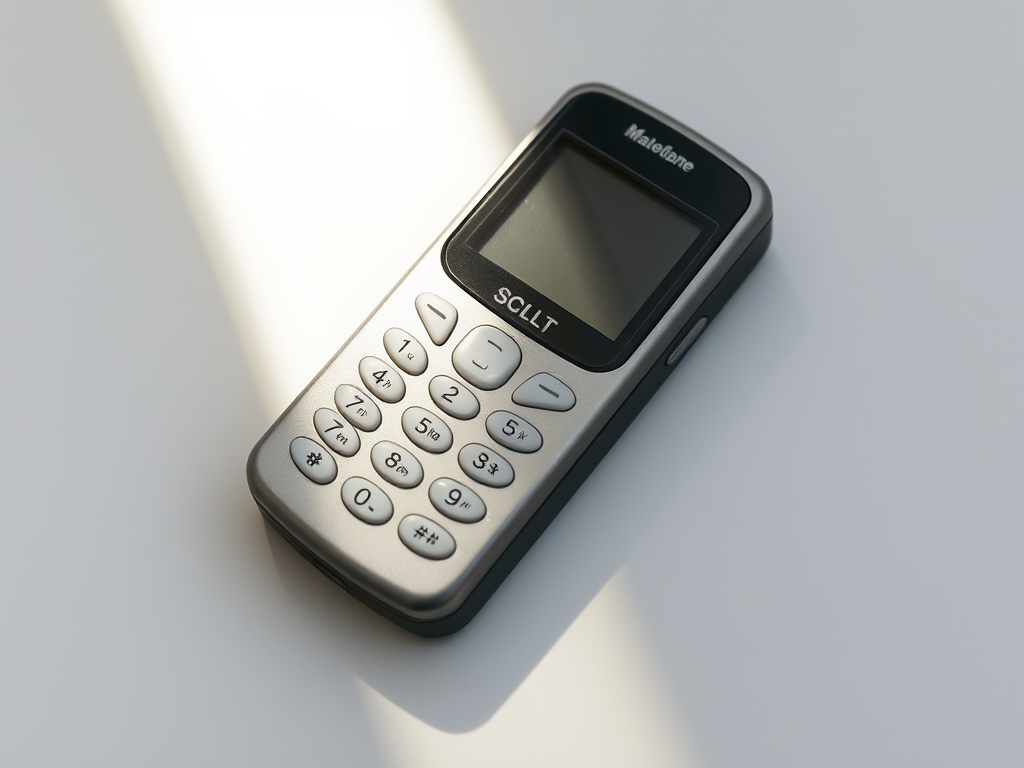
I began with a drawer–one I hadn’t touched in years. It creaked–not surprising since it hadn’t been opened since Clinton was president. Between the dog-eared notebooks and torn receipts was an ancient Nokia mobile phone, one that didn’t come with an internet feature.
But Marie Kondo hadn’t reminded me to put away its charger, tucked away in the corner of that same drawer. Not expecting the mobile relic to light up, I stuck it in. I swore that it should have been dead, but it blinked at me as if I owed it a living–or electricity. The screen flickered like an eye, opening after a long coma. And it spoke.
In a familiar voice. I froze. My voice was cracked by time–and regret. I should have laughed to hear myself–but I put the phone on the table. And listened.
📲📞📟📠☎️📳📴📲📞📟📠☎️📳📴📲📞📟📠☎️📳📴
With an obsession. Some messages sounded like confessions. Gentle nudges. Advice. Regret. Each memo was a breadcrumb in a dark mental recess–a reminder of who I used to be.
“You should have given your mom a chance–you’ve cast her aside like unwanted clothes.”
“Your brother has the right to make decisions about his own life. Why did you interfere?”
“You should have visited your grandmother. She cared for you when you were in the hospital.”
The voice cackled with Macbethian contempt each time it spoke, as if I was a wayward child.
📲📞📟📠☎️📳📴📲📞📟📠☎️📳📴📲📞📟📠☎️📳📴
The phone tolled without warning–my fingers wound tightly round it, not answering. There was no timestamp–just a cryptic missive.
“Release.”
The voice continued its speech, its tone ominous, yet comforting. The older me bore her soul.
“My mom never had anything nice to say–was never a supportive pillar. My brother’s heart was set on himself. And my grandmother? Well, she was forceful. Too forceful. Her way, or the by-way.
“So I left all of them on the shelf. Went my own way.”
The phone paused for a while, then continued, without residual cackling.
“All I wanted was a healthier family dynamic. I only wanted to fix it. Make it right. Fair.”
📲📞📟📠☎️📳📴📲📞📟📠☎️📳📴📲📞📟📠☎️📳📴
The voice stopped. My fingers unclenched, slowly. I left it on the table, its screen still blinking. No longer accusing. But pleading.
The screen on my new phone blinked, wondering. An invitation.
“Gathering at Aunt Gen’s place next Sunday. Just to let you know.”
That night, my voice memos disappeared. I didn’t try to retrieve them.
The phone said what it needed to. I navigated to the family chat on Whatsapp, and paused.
Anger is a kite—it must be tethered. Michelle Liew
🎏🪁🎈🪁🎏🎏🪁🎈🪁🎏🎏🪁🎈🪁🎏🎏🪁🎈
11-year-old Benji Lim shifted in his seat, his fingers twitching behind his desk. Scrawling a quick note to the classmate behind him was a little too hard to resist.
“Want to trade–“
He was halfway through his note when Ms. Tan’s shadow hovered over his desk. She didn’t flinch, but sighed as if she’d already had the detention bed-and-breakfast booked in advance.
“Benji, detention. An hour after school. No excuses this time.”
Benji’s mouth worked faster than his homework ever did.
“Go fly a kite!” Before he realised it, his feet were carrying him out of the classroom.
The detention room was his sanctuary for the rest of the afternoon. He found Aunt May hovering at the door of the apartment they shared after his mother lost her battle to lung cancer.
“You told your teacher to fly a kite,” Aunt May’s brown eyes held a wealth of meaning. “You’ll do just that. “
She handed Benji a lopsided, dusty fish-shaped kite that had rested in the utility room for a number of years. It was uneven, and caked with dust—like him.
“You’ll go to the field, and get that up there.” Aunt May’s words had him making his way to the door.
He took off to the nearby beach, his feet like a soldier’s performing an ill-timed march past. Palm fronds met the ground, but no matter what he did, the kite refused to lift.
A boy, a few years younger than himself, was flying a giant,self-made dragon kite—with the polished ease of someone twice his age.
“Can I help you?” He offered, watching Benji tussle with the kite like it owed him money.
Benji scoffed. “What’s the big deal? It’s just a stupid kite.”
The boy simply took his kite and offered a quiet smile. “Only if you don’t know how to fly it.”
With the practiced arm of a competitive expert, he simply tethered the kite to a nearby sign that read “BEWARE OF GUSTS.”
By a miracle of boyhood physics , the kite took to the air, tethered and leering. A squirt? Showing him up? His friends would have a field day on social media. He took the cumbersome kite off the tether —it nosedived, dragging Benji like a toddler holding a leash resistant pup.
The little boy shook his head, and once more tied Benji’s kite to the sign. It wobbled—it had no idea where it wanted to go. WIthout a word, the boy flew his dragon, his hands a steady Jackie Chan’s, stunts in panoramic loop.
Then both kites were in the air, syncing in a windswept dance. To his surprise, Benji felt lighter. The wind didn’t just tame the kite—it carried him along with it in a beautiful arc.
So it was two kites. Against the wind. Both winning.
Benji had a fleeting glance at the dynamic duo, charmed by their danceathon. He looked down, looking for the boy—but he had vanished.
In his place, taped to the sign, a neatly-written note.
“Go fly your kite again. But this time, tether it.”
Benji grinned.
🎏🪁🎈🪁🎏🎏🪁🎈🪁🎏🎏🪁🎈🪁🎏
If you liked what you read, please join me on Patreon!
Please find my ebook of horror microfiction, Echoes in the Dark, free for download here.
Please check out other amazing authors on Amazon! Today’s book is The Crazy Between Us by Eric Pellinen
📚📖📚📚📖📚📖📚📚📖📚📚📖📚📖📚📚📖📚📚📖📚📖 Award-winning architect Avery Lin, one-time award-winning architect, now a shadow darting between streetlights. She watched the city lights blur around her, all the time guzzling cans of Anchor Beer.
Drunkenness was her only relief; it protected her from downturned eyes.
Stray cats were her only company; some even became fast friends. One, its silvery eyes communicating feline messages of invitation, beckoned her down an alley.
At its end was a weathered, oak door. Scratched. Etched with the crude marks of vandals. She pushed it open and was hit instantly by a musty smell.
Musty, yet thrilling. Intrigued by its possibilities, Avery stepped in further to find…
A plethora of books lining shelves from right to left. Volumes of ancient encyclopedias speaking wisdom she was yet to understand. Staircases coiled up through the levels like question marks–this was a library full of answers. 📚📖📚📚📖📚📖📚📚📖📚📚📖📚📖📚📚📖📚📚📖📚📖
The bookshelves towered over Avery, emanating a comforting smell—a woodsy mixture of must and oak. It was a veritable sea, extending from floor to ceiling with waves of white and black print.
The brown wave overwhelmed Avery, drowning her in a Tsunami of questions. The pages and tomes seemed to wrap around her, like newspaper cuttings enveloping her in a desert of uncertainty.
Despite the library’s relative serenity, Avery drifted restlessly between aisles, the books a landslide threat. Some of them had unnerving titles—The Life You Could Have Lived, and Balm for the Lost Soul.
The first opened itself to a page—one with moving images of herself on it. A version of herself that never gave up. Skyscrapers around her rose. Laughter reverberated. People clapped. She shut the book, fingers trembling.
The second opened to another page of moving images, showing the moment her confidence crumbled. Into irretrievable fragments. She relieved this past–but through the eyes of a witness.
The pages breathed when she fingered them–too a lived to be mere paper. She watched herself live a version of life that she only dreamt of.
The librarian appeared, tall, mirrored, ageless. Her eyes were dark, twin mirrors. Bespectacled, donned in a white blouse with its collar wrapped around her neck. “‘You’re long overdue,” they taunted. “Not for a book. For becoming who you should be.”
A storm raged briefly in the poetry section. Words rained down her overcoat. She wiped her hands on her sides, then brought them in front of her face. They were ink-stained.
She sat in a quiet alcove in the library’s corner, watching her “perfect life” replay again and again between that pages of The Life You Could Have Lived. Her heart pounded with a series of dull, painful thuds.
A figure manifested in the corner of the room—tall, ageless, her eyes eerily mirrored. She drifted toward Avery, finally stopping to shoot her a condescending look. “You’re long overdue. Not for returning a book, though that needs looking into. We’re concerned about you—becoming.” 📚📖📚📚📖📚📖📚📚📖📚📚📖📚📖📚📚📖📚📚📖📚📖 Avery shot her a look—a stormy mix of frustration and confusion. The librarian hovered around the alcove, her shadow noiseless. Then, without looking at Avery, she dropped a tome on her table. It bore no title—only running ink.
“You’re to fill it in.” Her voice was broken, as brittle as the ancient volume’s paper. “You’re not to erase anything. What you write remains—set, alive.”
Avery stared at the notebook, her look as blank as the pages before her. They were blank, but warm to the touch.
The librarian added, with a touch of kindness. “When you’re ready, shelve it where everyone can see it. Becoming is for all to witness.”
The dust in the alcove no longer clung to her: it settled, like time taking gentle breaths. The surrounding shelves became a polished brown. The pages of the old tomes were pure white; they had lost their dog ears and yellow tone. 📚📖📚📚📖📚📖📚📚📖📚📚📖📚📖📚📚📖📚📚📖📚📖 The sun shone, its gentle rays jostling her awake in her car. The sky’s faint blue colour was one that she hadn’t seen in months. The now familiar library tome lay on her lap, smelling faintly of salt. In her hand was a black charcoal pencil, fresh, eager to begin.
No librarian. No one else around her. Just the sound of the pencil scratching against paper.
And so she writes. Not for anyone else’s eyes. She began to pen the tome, now no longer ancient, just for herself.
And she smiles, for the first time in years. 📚📖📚📚📖📚📖📚📚📖📚📚📖📚📖📚📚📖📚📚📖📚📖
Avery stepped into the library two years later, beaming as stepped into the alcove. The fresh smell of new books greeted her. New shelves scaled the walls, filled with new tomes and encyclopedias, each with fresh pages.
The tome she had written lay on the table she had sat at two years earlier, waiting for her to turn its pages. The same fresh smell entered her nose gently, rousing her other senses, widening her smile.
The librarian hovered over to her, now dressed in pressed jeans, a sweet tee and a denim vest. She had tied up her hair in a high ponytail.
“Ready to add a new chapter to your tome?” She grinned, her long fringe cascading over her eyes.
Rodents in a nutshell. Squirrel Power. –Michelle Liew
🐿️🐿️🐿️🐿️🐿️🐿️🐿️🐿️🐿️🐿️🐿️🐿️🐿️🐿️🐿️🐿️🐿️🐿️🐿️🐿️🐿️🐿️🐿️
“Quick, the little squirt’s catching up!” Pip the bold mind behind the squirrels’ operations, darted ahead. Behind the group of four buffoning rodents was a hapless toddler, wailing and stumbling after his stolen PB and J sandwich.
Of course, the said sandwich was already ‘mysteriously’ disappearing as the toddler sobbed his way through the branches, his hassled mother behind him: “Let it go, Tom.”
🐿️🐿️🐿️🐿️ It was four tails, one task. Nutty, Hazel, Chipper and Pip were to pull off the snack theft of their lives. Their mission—to steal an unsuspecting human’s lunch and vanish. They had trained for this—in alleys, parks, in the shadows of sandwich shops. They simply couldn’t fail.
And it seemed that operation PB and J was a go—they had struck before the poor child’s lunch even hit the grass.
🐿️🐿️🐿️🐿️🐿️🐿️🐿️🐿️🐿️🐿️🐿️🐿️🐿️🐿️🐿️🐿️🐿️🐿️🐿️🐿️🐿️🐿️🐿️ I call it, “The Last lunchwich!” Chipper had whispered, just seconds before the drama unfolded.
Just as Chipper, the renaissance squirrel of the group, hung painting from a branch with his prize, the sandwich in his cheek like a bomb about to go off, a blinding ray of light surged from a nearby laboratory.
A sonic BOOM.
A throbbing pulse.
The earth started shaking.
The sky gave a loud hiccup, and the trees bowed inward, as if reminiscing on something old and forgotten.
Their world contorted. Time fractured. Something suspended the rodents midair—then drops them like ripe acorns. A ripple hit them like solidified thoughts. They fell inward—not down. 🐿️🐿️🐿️🐿️🐿️🐿️🐿️🐿️🐿️🐿️🐿️🐿️🐿️🐿️🐿️🐿️🐿️🐿️🐿️🐿️🐿️🐿️🐿️
The squirrels rose, relieved to be alive.
But they were—-different.
In essence, their bodies were the same. But their thoughts were far from the usual.
They spoke. They reasoned. But they recalled things that were strange—-not their own. Even the trees in their park seemed—off. Too bent. Too tall.
Hazel calculated wind vectors—but had cut every class in Squirrel School she could. Chipper, of course, became the carver of tree trunks. Pip—well—he whispered coordinates that made sense to himself and noone else.
And the Teenage Mutant Ninja Squirrels were born.
🐿️🐿️🐿️🐿️🐿️🐿️🐿️🐿️🐿️🐿️🐿️🐿️🐿️🐿️🐿️🐿️🐿️🐿️🐿️🐿️🐿️🐿️🐿️ Nutty, the sensible voice of the group, declared their next mission.
“We must defend the park.”
The other squirrels shot thoughtful looks at each other, nodding in agreement.
Defense, however, meant sabotage. Something—-or someone—sliced the power lines. Garbage trucks had to reroute, and the air became dense with their suffocating stench. Cell towers sizzled, their signals swallowed in static.
To the squirrels, human tech were trespassers. Parasites. They needed to purge it. Misson parameters shifted: control, contain, cleanse.
The battle cries? Lines of nutshells, ready for a seige.
Hazel disarmed a CCTV with a satisfied smirk.
The rodents’ actions seemed like harmless mammalian play to the passersby in the park. But to the squirrels? It was DEAD serious.
🐿️🐿️🐿️🐿️🐿️🐿️🐿️🐿️🐿️🐿️🐿️🐿️🐿️🐿️🐿️🐿️🐿️🐿️🐿️🐿️🐿️🐿️🐿️
Then, even stranger things happened. The mission shifted—again.
Chipper glitched, sculpting trunks with binary, not pictures. Pip’s codes twisted into circuit diagrams. Nutty’s sentences fractured like corrupted data.
The squrrels hadn’t mutated—they were rogue AI implanted in organic hosts.
They took off, awakened.
🐿️🐿️🐿️🐿️🐿️🐿️🐿️🐿️🐿️🐿️🐿️🐿️🐿️🐿️🐿️🐿️🐿️🐿️🐿️🐿️🐿️🐿️🐿️ This story is entirely original. AI tags are coincidental. The number of words between the quote and disclaimer is 500.
If you like what you’ve read, do join me on Patreon!
Find other great books on Amazon! Today’s great book:
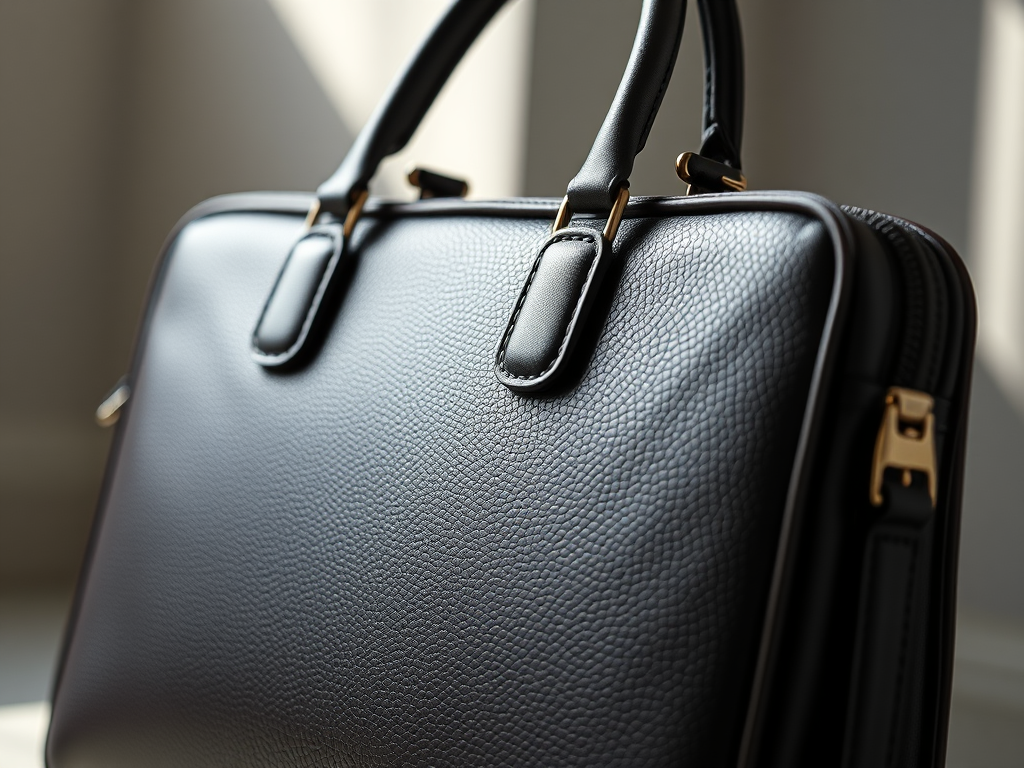
Mr Goh moved into the old boarding house in Kong AIk road without much fanfare, quiet man that he was. The impeccably dressed accountant always had his trusty briefcase with him; though a little worn, its leather sheen never dulled, and it was always at his side, as if it contained something indispensable. He was just a stranger, a face in the crowd.
Then, strange disappearances. Mysterious coincidences—until they weren’t anymore.
🧳💼👜💼🧳💼👜💼🧳💼👜💼🧳💼👜💼🧳💼👜💼
Coincidences they were, but they didn’t get past Detective MIra Chong. Her trained instincts spotted them the minute she got Mr. Goh for a quiet sit-down.
He was polite. Too polished. As if he had rehearsed every word.
“Detective,” he cautioned with a practiced look of smugness. “Some people aren’t meant to be found.”
“What do you mean?” She sat back in her chair, tilted her head, and caught his eye. He simply placed his briefcase on the table . When it snapped open, it was absolutely–
Different.
She expected documents. But instead saw–movement.
She staggered back, breath hitching. 🧳💼👜💼🧳💼👜💼🧳💼👜💼🧳💼👜💼🧳💼👜💼
Inside the briefcase were….faces. Eyes blinking, mouths frozen mid-scream. Features distorted, as if pressed against glass.
“You see, Miss,” Mr. Goh murmured, smug and assured, “I don’t kill them. I collect them.”
Seasoned detective though she was, bile burned her throat. She swallowed hard, keeping the nausea down. These were the people who had vanished. Their souls—stored.
She reached for her gun. Old Man Goh sighed, eyeing her too calmly.
“Careful, Miss Chong.” His smile was too knowing. “You don’t want to be with them–too.” 🧳💼👜💼🧳💼👜💼🧳💼👜💼🧳💼👜💼🧳💼👜💼
Mira pulled the trigger. The briefcase moved, though Mr. Goh remained stoic. He merely chuckled, seeing the bullet hole in it seal itself.
“It doesn’t work like that, ” he fixed her with a condescending gaze. “Didn’t you know?” You can’t kill the dead.”
He opened the case with a flick of his fingers and tilted it towards her. The faces shrieked. Mira felt a tug. Pain razed her skull. Something was pulling her very essence, dragging her towards the case.
The briefcase wasn’t Mr. Goh’s storage box. It was a doorway. And it was STARVING.
Her fingers slackened, and her gun drifted to the floor. Her vision doubled. Her body gave way. She stepped back, but it no longer listened to her. 🧳💼👜💼🧳💼👜💼🧳💼👜💼🧳💼👜💼🧳💼👜💼
No.
She gritted her teeth and banged the table with all the energy she could muster. The sharp sting in her head kept her grounded, keeping her soul anchored in her body, where it was meant to be.
“You’re stronger than most women,” Mr. Goh’s eyes glimmered with faint surprise. He quickly masked it with a sinister grin, his voice dripping with both admiration and something—-dark. “But you’re too late.”
Mira returned his grin—with a diabolical snicker. “You’re not the only one who collects, you know.”
She stood tall, eyes locked on his. She reached for the torn rucksack slung across her shoulder. Inside, pairs of eyes. They flicked about constantly, searching for an exit.
Mr. Goh’s grin faltered. And he knew.
This story is entirely original. Any AI tags are coincidental. It 500 words between the quote and disclaimer.







 The Getting Literal Writing Alcove