Since you don’t seem to use these loudspeakers as they should be used, I will do it for you.
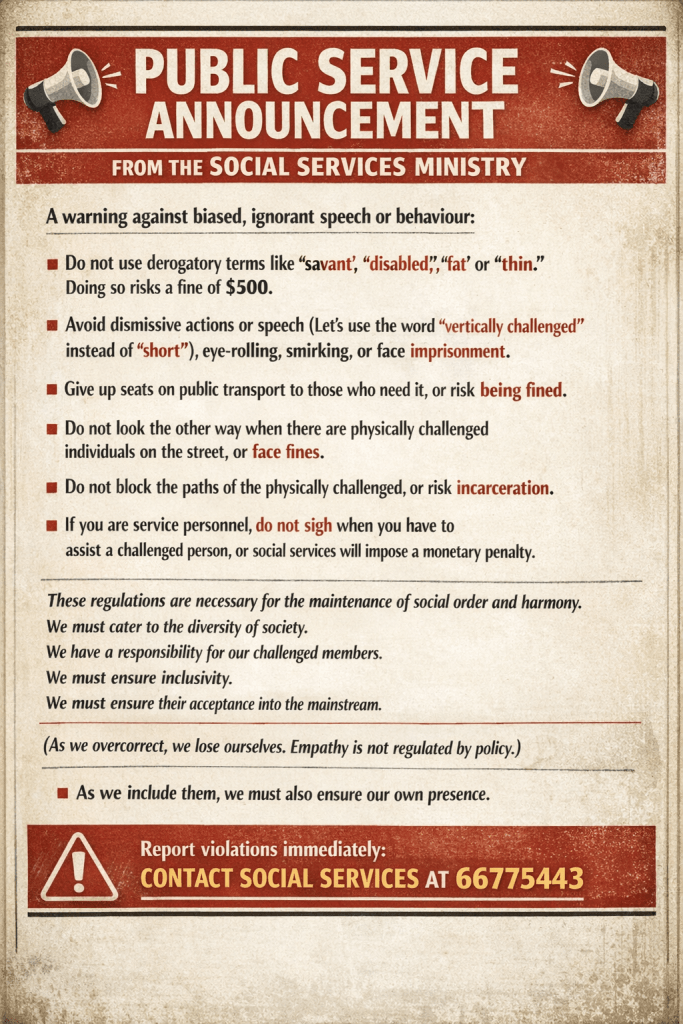
This is a Public Service Announcement on behalf of the Social Services Ministry, for the fostering of healthy relationships.
A warning against biased, ignorant speech or behaviour:
Do not use derogatory terms like “savant”, “disabled”, “fat” or “thin” to avoid offending. Doing so creates the risk of a $500 fine.
Avoid dismissive actions or speech, such as eye-rolling, smirking, or face an imprisonment term. Let us use the phrase “vertically challenged” instead of “short”.
Give up seats on public transport to those who need it, or risk being fined.
Do not look the other way when there are physically challenged individuals on the street, or face fines.
Do not block the paths of the physically challenged, or risk incarceration.
If you are a service personnel, do not sigh when you have to assist a challenged person, or social services will impose a monetary penalty.
These regulations are necessary to maintain social order and harmony. We must cater to the diversity of society. We have a responsibility for our challenged members. We must ensure inclusivity. We must ensure their acceptance into the mainstream.
As we include them, we must also ensure our own presence.
If you observe individuals breaking the rules listed, do not hesitate to contact social services at 66775443.
📢 📄 ⚠️
Original Public Announcement Poem by Michelle Liew Tsui-Lin
If you like this story, do join me on Patreon! Buy this blog a coffee — it keeps the words flowing and the lights Your kind donation via Paypal would be greatly appreciated!
Please find a book of my horror microfiction, Echoes in the Dark, free for download here.
Artificial intelligence. The bane and boon of every writer. It’s here to stay, so living without it is impossible, but the hurdles it introduces to the writing process make living with it even more so.
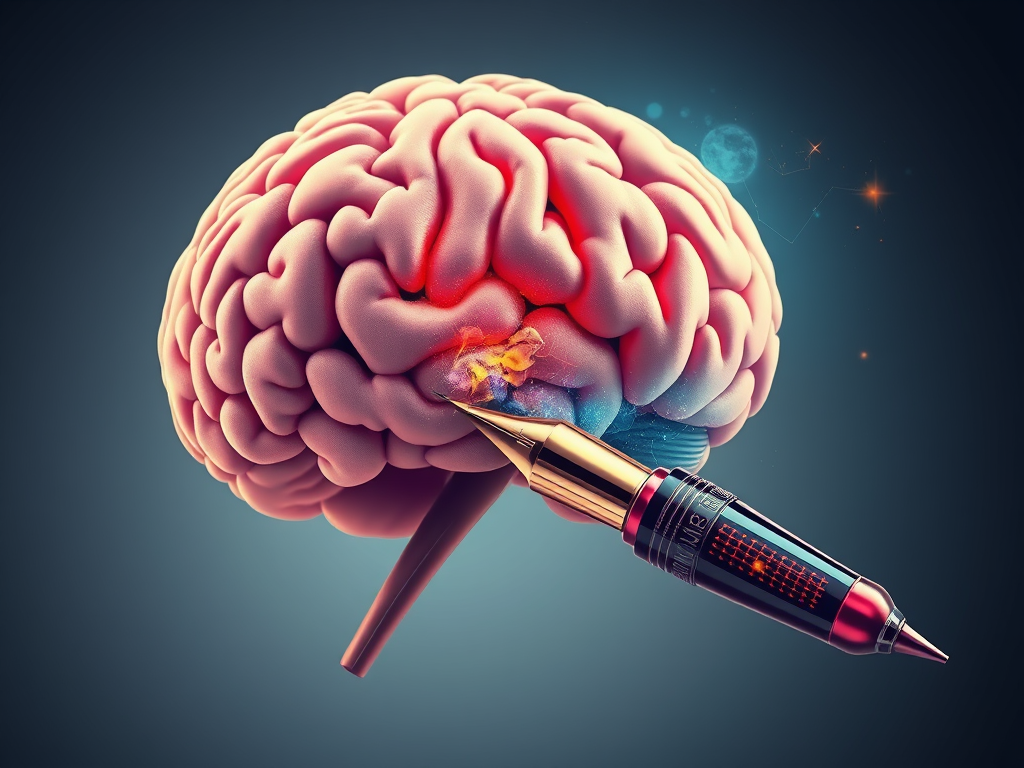
When harnessed appropriately, artificial intelligence can enhance writing and make us better writers. However, the rise of AI plagiarism is a growing concern. How do we bring the artificial brain and pen together in a responsible, ethical manner? How do we bring the artificial brain, the human one and the pen together?
The Benefits of Artificial Intelligence for Writing
AI helps generate ideas and outlines, which can make Writer’s Block ancient history. It also offers phrasing suggestions, which can make the pen mightier than the sword, for want of a better phrase. Writers can use it to generate engaging fiction story outlines, reducing the anxiety of the blank page. By offering new tones and writing styles, it inspires thought,
Tools like Chat GPT can also assist with repetitive tasks such as editing for grammar and formatting, making writers more productive. It also enhances the clarity of expression, speeding up the early stages of writing. When used responsibly, it strengthens the writing process without compromising a writer’s unique voice.
Why Writers Must Be Responsible When Using AI
AI is a welcome tool that allows writers to have a much-needed breather. But this tool can become dangerous if wrongly wielded.
AI tools can compromise authenticity, ethics and a writer’s credibility. Over-relying on it can lead to c work that seems too generic – the classic cookie-cutter syndrome.
Bots like Chat GPT and Deep Seek can make unintentional plagiarism a real threat. AI can echo existing works. Undisclosed or even disclosed use can damage trust with editors and fellow writers. Audiences who expect ‘the real deal’ –human-crafted work–will be alienated.
Above all, writing is a deeply personal endeavour that requires time, thought, insight and feeling. While AI can make suggestions and shape ideas, it cannot and should never replace the heart in the pen.
Real-Life Scenarios: When AI Aided the Writing Process
After staring at a blank screen for hours to write an article entitled “10 ways to reduce burnout”, a writer can turn to an AI tool to give Writer’s Block the boot.
But instead of asking it to write the article, he can prompt it: “Can you suggest a few tips for reducing burnout in point form?”
The tool can suggest taking outdoor breaks or setting timelines, while writers can use the suggestions to prompt thought. Combined with personal experience and expert sources, they can generate original pieces in their voices.
Real-Life Scenario: When AI Harmed the Writing Process
I teach English as a Second Language, so this scenario is familiar and one of my favourites to highlight–_student plagiarism.
I often remind my teen charges not to hand in essays that bots have produced. These are easy enough to spot —they are not in sync with their current linguistic capabilities.
Fortunately for their progress and credibility, they cannot do this in open exams!
When Brain Meets Pen: Responsible AI Use in Writing
Firstly, use Chat GPT and other AI tools as support, not ghostwriters. AI can initiate ideas or rephrase awkward sentences–but they are not the real deal Writers should let their voices and intent lead.
Always fact-check. AI can sometimes generate outdated information, so cross-check its facts against other platforms before citing them.
Remember the human touch. No story, article or poem can pass as one without a writer’s style. Readers can identify that right away.
Use the right tool to complete tasks. Grammarly or ProWritingAid can assist with editing mistakes in grammar or phrasing. ChatGPT can suggest topics that a writer can explore.
The brain can meet the pen when brought together responsibly and with integrity.
If you like this story, do join me on Patreon! Buy this blog a coffee — it keeps the words flowing and the lights on! ☕Your kind donation via Paypal would be greatly appreciated!
Please find a book of my horror microfiction, Echoes in the Dark, free for download here.

 The Getting Literal Writing Alcove