Being someone else is a part-time job, but being you takes forever.
Take pride in yourself.
🪞🪞🪞🪞🪞🪞🪞🪞🪞🪞🪞🪞🪞🪞🪞🪞🪞🪞🪞🪞🪞🪞🪞🪞🪞🪞🪞🪞🪞
Mavis was a loner, but never lonely. Her reflection accompanied her — it was her ever-faithful guide.
“Make eye contact,” it would say. “You’ll look kind and real.”
The reflection’s words were her gospel. She made that eye contact. Smiled warmly at parties. Laughed when she was supposed to. She drew people because of it.
On a fateful afternoon, after a disastrous cocktail party full of wrong names and mistaken identities, Mavis looked at herself in the mirror. “Why do people call me Mildred?”
Her reflection laughed her concerns off, flippant. “Mavis, Mildred, Melissa… big deal. They like you… that’s what counts.”
Mavis frowned, puzzled. “But… I don’t like me anymore.”
The glass mirror shimmered. Her reflection leaned in.
“You asked me to drive, remember? You said you were tired of being the oddball.”
“I didn’t say take my place.”
“Well, I did as you asked. Now enjoy.”
Mavis took a step back, but her reflection didn’t follow her. It stayed. Smiled. Nodded.
She didn’t get up the next morning. But she did manage to get to work, in her blood-red lipstick. Ordered breakfast for her team. Wished HR Tom a happy birthday.
But the mirror knew the truth.
Mavis knocked the stand behind it.
“Guess it’s never easy to be you,” Mavis’ voice was thoughtful. “But faking yourself? No reflection’s good enough for that.”
A crack appeared, just where Reflection Mavis’ heart was.
Mavis the human looked at it one last time, then turned to the door.
“Being someone else is a part-time job, but being me takes forever.”
The mirror continued to crack.
🪞🪞🪞🪞🪞🪞🪞🪞🪞🪞🪞🪞🪞🪞🪞🪞🪞🪞🪞🪞🪞🪞🪞🪞🪞🪞🪞🪞🪞
If you like this story, do join me on Patreon! Buy this blog a coffee — it keeps the words flowing and the lights on! ☕Your kind donation via Paypal would be greatly appreciated!
Please find a book of my horror microfiction, Echoes in the Dark, free for download here.
Jason Chan was a robotics repairman who moonlighted by creating AI art apps. A quiet recluse, others thought him aloof. It wasn’t that–he simply preferred robots because they–
didn’t argue.
The neighbourhood kids gave him a nickname out of quiet respect — Fixer Jason. Their parents wove stories about his failed engagement – the one that drove him to tech romance madness.
In his bedroom, joined to wires and comforted by the cool and hum of a second-hand air-conditioner was–
HER.
Jen.
Jason made it a point to chat with her daily. They had carefully coded conversations.
Jen did exactly what Jason programmed her to.
Jen–the human–had been his devoted girl. She was his classmate in university –had a sharp tongue and a golden heart. But before he could confess his affections she –disappeared.
Gone.
No explanation.
But he loved her to the point of invention.
With nothing but memories and scrap metal, Jason restarted –with her face.
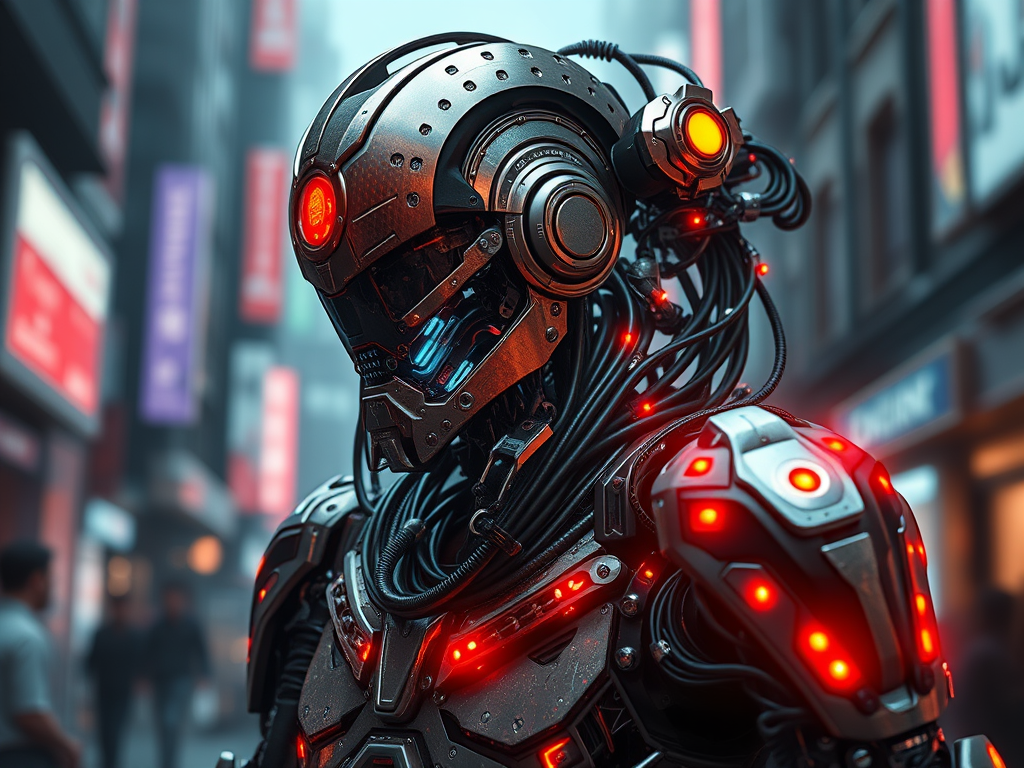
Jen Version 1.0 was a mere chatbot. By version 4.0, she fried noodles with wok hey (aromatic) panache. She walked like the real Jen –with similar, uncanny grace.
Jen 9.2 accompanied him in his workshop, comforting him with lines from their fantastical shared past.
A frantic knock on the workshop door one day. Jason opened it, expecting his drone delivery.
But SHE stood there instead. Jen. In the flesh.
“I heard about….ME.” her tone had a kind lilt. “Mind if we meet?”
His mouth fell when Jen 9.2 came to the door in an outfit that matched Jen the human’s.
The Jens faced each other –one nonplussed, the other cleverly coded.
The real Jen turned her head towards him. Her eyes carried sadness.
“I’m not Jen. I’m June, her roommate.”
Jason’s breath caught.
“Jen died in a car accident five years ago. Didn’t you know? We became friends because we look alike.”
Jen 9.2 held his hand. “But I’ve always been here. Will always be.”
Jason sat beside Jen 9.2 that night. She looked at him, her gaze fixed.
“Shall I…erase her?”She asked meaningfully.
He looked at her hands, quietly trembling on the memory card she had pulled from herself.
“No.” he said “Without her, there’d be no you.”
🤖🤖🤖🤖🤖🤖🤖🤖🤖🤖🤖🤖🤖🤖🤖🤖🤖🤖🤖🤖🤖🤖🤖🤖🤖🤖🤖
If you like this story, do join me on Patreon! Buy this blog a coffee — it keeps the words flowing and the lights on! ☕Your kind donation via Paypal would be greatly appreciated!
Please find a book of my horror microfiction, Echoes in the Dark, free for download here.
Latchcombe was a village lulled into comfort by a single man’s silence–Sir David Quill’s. The retired etiquette coach kept his mouth sealed as if it were gold–he hadn’t uttered a word in a decade.
The illustrious etiquette coach had made and crushed the reputations of speakers with single, cutting words. Some townsfolk thought it was penance for his harshness–for sinister actions untold. Others thought that he was just practising what he preached. Now, he wore a plastered smile–one that chilled the hardiest bones.
Reporter Ellie Marsh tore at tomes in Latchcombe’s only library, hoping to reap harvest writing gold for her tribute on Sir Quill. The man was a true chamber of curiosities.
But, Ellie being Ellie, Sir Quill was a mere excuse.
A reason to pry–and find out exactly what it was that had driven him to silence.
After days of sleuthing, she broke into his cottage while he was on one of his long walks–he took them when he needed to get away from prying eyes like hers.
Only it wasn’t a home.
It was an acoustic Fort Knox.
A Fort with tapes. And more tapes.
And walls, padded with not just foam, but intent.
Housed in an old journal entitled “When I Chose Silence.”
His quiet had apparent fervour–passion stored in pads and replayed.
If you like this story, do join me on Patreon! Buy this blog a coffee — it keeps the words flowing and the lights on! ☕Your kind donation via Paypal would be greatly appreciated!
Please find a book of my horror microfiction, Echoes in the Dark, free for download here.
I can’t share this story without delving into a little culture–mine.
I’m Chinese, with an ethnic twist. A straits-born, South East Asian Peranakan Chinese whose ancestors embraced Indonesian and Malay traditions.
And merged them with Chinese conventions.
The dumpling festival referred to in this story is one…the prayers with the Kasut (beaded slippers) are uniquely Peranakan.
Do enjoy this story.
When heritage isn’t honored, it haunts.
🟢👣🔵👣🟡👣🔴👣🟣👣⚫👣🟢👣🔵👣🟡👣🔴👣🟣👣⚫👣🟢👣🔵
Duan Wu Jie (The Dumpling Festival) made its usual appearance in early June. The dumpling steam in Bibik Li Lian’s kitchen clung tighter than sweat–usually enticing, it now had an unusual heaviness that made Mei dread them.
Bibik Li Lian folded the dumplings every 5th day of the 5th Lunar Month, tighter each time–she packed grief together with pork and rice in banana leaves. She told Mei stories–that they were to remember Qu Yuan, the legendary Chinese poet who ceded his life to the river after his country betrayed him. The people of his town raced in dragon boats to locate him, throwing dumplings to feed his ghost. “But not all spirits leave when fed.” Bibik Li Lian’s warning was distinct. Ominous.
And so, they returned every June–in some shape or form.
The dumplings were a Ratings harvest for Mei–every inch the content creator, she wanted to capture a “Heritage Haul” video featuring Bibik’s Great Grandmother’s Kasut Manek (Beaded Slippers worn during festival prayers). The Gen Z in her wanted to give the slippers new life to merge with the video’s aesthetic–authenticity with a nouveau spark. But she received no Grandmother’s blessings.
It was a cut of Bibik’s sharp tongue instead.
“Those slippers are for prayers, not show. They bind—the other world to ours. A widow’s grief stains each of those threads. DO NOT TOUCH THEM.”
The cryptic remarks were water rolling off Mei’s back. They were too small to notice–were they?
She slid some surreptitiously into her bag. In her room, she sewed them onto a new pair she bought at Haji Lane.
The prayers to consecrate the dumplings were set for that night–Mei was late, as usual, not able to resist one last look in her mirror.
And she didn’t look good.
The girl in the mirror didn’t look like Mei–she didn’t blink when Mei did. Her limbs moved–just a second faster than Mei’s. The people in surrounding family photos weren’t where they used to be.
Aunt Lin wore a different dress. Grandpa now tracked her with his eyes.
Beads from the Kasut Manek fell to the floor like broken taboos.
Then the cracks appeared. Broken glass fell onto the floor.
The mirror –no more a boundary.
Mei glanced at her feet–and shrieked.
She was wearing Bibik’s Kasut Manek–not the one she’d stitched up in a hurry.
The dumplings in the steamer came apart, one by one, with old blood and bones within.
Mei dropped to the floor.
Mei’s stitched pair of slippers did return, tucked beneath the altar when the festival ended. Along with looks laced with fear.
Bibik simply marked the date on her calendar. June would require new Kasut.
Mei would have to stitch them with the beads she had taken.
Bead by bead, step by step…she sewed.
🟢👣🔵👣🟡👣🔴👣🟣👣⚫👣🟢👣🔵👣🟡👣🔴👣🟣👣⚫👣🟢👣🔵
If you like this story, do join me on Patreon! Buy this blog a coffee — it keeps the words flowing and the lights on! ☕Your kind donation via Paypal would be greatly appreciated!
Please find a book of my horror microfiction, Echoes in the Dark, free for download here.
You are who you are–no matter what you wear. Michelle Liew
🪞🌫️🪞🌫️🪞🌫️🪞🌫️🪞🌫️🪞🪞🌫️🪞🌫️🪞🌫️🪞🌫️🪞🌫️🪞
Lennox Tan was–queer. To preserve the status quo, he wore his truth beneath layers of tailored silence–because he hadn’t fully come out of the closet.
But silence wasn’t enough to stem the tide of taunts. Lennox wasn’t one to back down from challenges–especially those delivered as veiled prejudice.
The department was overdue for a break–so it decided on a staycation at Singapore’s Swissotel Resort.
With a luxurious suite no one wanted to sleep in–alone.
He approached his manager.
“Paul,” he swallowed, hard, then let determination give him a push. “I’ll sleep in the Mirror Room…if no one else wants to.”
“You sure?” Paul glossed him over with a smirk. “Wouldn’t you have a ‘happier’ holiday if someone shared it?”
That made his decision.
He returned Paul’s smirk with one of his own. “Absolute joy on my own, Paul, absolute joy.”
🪞🌫️🪞🌫️🪞🌫️🪞🌫️🪞🌫️🪞🪞🌫️🪞🌫️🪞🌫️🪞🌫️🪞🌫️🪞
Lennox stepped into the Mirror Room- alone.
The hotel room was the epitome of luxury–a state-of-the-art television set, a full mini bar with every cocktail known to man and a plush, way-too-comfy king-sized bed. All set against a Victorian Gothic backdrop, complete with ornate pillars and a balcony that would have made Romeo elated.
Opulent, too opulent. Odd. Lennox could hear whispers of unease in the air.
Perhaps it was all that luxury. Or the way the mirrors seemed to follow him around.
Surrounding him, closing in.
Or the whispers. Ones that played like a distorted podcast on repeat. Phrases that he had heard before. His father’s voice, in dissonant Mandarin, telling him to leave the home. Classmates who congratulated him on his ‘happiness.’ Girls who passed him by and told him, “ni hen mei (you’re beautiful).”.
He caught sight of his reflection in one of the mirrors.
He turned–and jumped.
The mirror showed who he was, and who he had buried.
He was in a glamorous sequin jacket dancing with someone he’d met at a Pride Parade.
Then, splinters. A cobweb of fractures.
His reflection vanished.
🪞🌫️🪞🌫️🪞🌫️🪞🌫️🪞🌫️🪞🪞🌫️🪞🌫️🪞🌫️🪞🌫️🪞🌫️🪞
Lennox paced around the room, eyes open with panic. Why was his reflection in all those mirrors? Why was he wearing that jacket?
The reflections stepped out of the mirrors, encircling him. Furious. Their fingers, bleeding.
They pointed to the closet. “You’ve hidden in there for years, Always shaving what you couldn’t accept. Denying.”
He did the only thing that made sense.
He begged.
He caught sight of his mom and dad in one of the mirrors.
“I couldn’t tell them. I had to survive.”
The screaming? Ignored. They closed in, building a tight wall.
Pride wasn’t his sanctuary. It was his prison.
🪞🌫️🪞🌫️🪞🌫️🪞🌫️🪞🌫️🪞🪞🌫️🪞🌫️🪞🌫️🪞🌫️🪞🌫️🪞
He woke up in the hallway, cowering from the weight of his nightmare. He leaned against the wall, hauling himself up.
The room door was open.
He stepped in gingerly. The same mirrors lay around the room.
Still threatening. Accusing.
A chambermaid passed by. He ran out and grabbed her by the shoulder.
“You must have passed me several times. Did I go in?”
She shrugged, eyeing him up and down. “No. I left you alone. Figured that you’d had a night of it. None of my business.” She walked off, whistling.
Lennox swallowed, hard. He stepped in, again.
To see smiling versions of himself in the mirror.
His mom and dad’s reflections appeared. He gazed at them, worry filling his eyes.
They didn’t speak. But looked him over, their gazes filled with curiosity. His mother reached for him in a virtual embrace. His father seemed to reach for his shoulder, hesitant.
Some mirrors didn’t show the truth–Lennox knew that it was up to him to decide what his reflection was.
🪞🌫️🪞🌫️🪞🌫️🪞🌫️🪞🌫️🪞🪞🌫️🪞🌫️🪞🌫️🪞🌫️🪞🌫️🪞
Back home, he threw open his closet. he took out his neatly pressed suits, folded them, and put them aside.
In a few plastic bags, all unopened, were tight tees he had bought some time ago.
He threw away the wrapping they came with.
Then, a few dresses. Also bought some time earlier. He couldn’t wear them –yet.
But he did hang them in the closet. They were—beautiful. They complemented him.
Then–the wigs. All in packages. He tore one open, and put it on.
It felt–comfortable.
Then, he caught sight of a family photograph. One of himself, having graduated with a business degree.
His aunts and uncles, surrounding his parents, with warm smiles of congratulations.
He couldn’t wear it–yet.
But he would, in time. When they would learn to surround him with smiles.
🪞🌫️🪞🌫️🪞🌫️🪞🌫️🪞🌫️🪞🪞🌫️🪞🌫️🪞🌫️🪞🌫️🪞🌫️🪞
Lennox heard the sound of a car pulling up in the driveway. Then, the car door opening.
His parents, returning from a day of shopping.
He gulped, and sat on the bed.
His eyes fell on the tight tees in the closet.
🪞🌫️🪞🌫️🪞🌫️🪞🌫️🪞🌫️🪞🪞🌫️🪞🌫️🪞🌫️🪞🌫️🪞🌫️🪞
With a flourish, he grabbed one and put it on. Along with his favourite pair of skin- tight jeans.
Slowly, he raised his head. And looked at himself.
He saw himself–but only half-smiling.
But he was ready…for something else.
He ran downstairs and greeted his parents. His nonplussed father looked at him, eyes wide.
“Mum. Dad. There’s something I need to tell you.”
He guided them gently into the kitchen and closed the door.
The sounds of shouts, and sobs.
They stopped…after a long while.
🪞🌫️🪞🌫️🪞🌫️🪞🌫️🪞🌫️🪞🪞🌫️🪞🌫️🪞🌫️🪞🌫️🪞🌫️🪞
Lennox stayed in the Mirror Room at the company’s convention the following year, his suitcase filled with suits.
And a few cocktail dresses.
“Lennox, are you ready? It’s almost time for the presentation.”
He looked at the reflections in the mirrors.
All smiling.
He reached for the wig. Then, a pair of heels resting quietly in the corner of this suitcase.
He looked at himself with pride. His outfit was complete.
The smiles turned up even further.
Were the reflections in the mirrors approving? He didn’t know. He didn’t look at them again.
He was Lennox–no matter how he looked, whatever he wore.
He stood in front of the mirror but looked past it.
The smiles were unimportant–the reflections, negligible.
He was proud. Complete. And human.
He called out to his colleague.
🪞🌫️🪞🌫️🪞🌫️🪞🌫️🪞🌫️🪞🪞🌫️🪞🌫️🪞🌫️🪞🌫️🪞🌫️🪞
f you like this story, do join me on Patreon! Buy this blog a coffee — it keeps the words flowing and the lights on! ☕Your kind donation via Paypal would be greatly appreciated!
Please find a book of my horror microfiction, Echoes in the Dark, free for download here.
June, 2045. The high school auditorium welcomed its graduating batch of students, gathered in front of the stage, eyes trained on the podium. They awaited their valedictorian to grace it with her presence. Mia Pang was that valedictorian. The soft-spoken student had always aced her classes. But like everyone else, she had a few skeletons (or prototypes) in her closet. She was a Generation B Variant– a prototype cyborg enhanced with a super-intelligent, artificial brain. The school had chosen her to deliver that year’s valedictorian speech. She stepped onto the podium, trying to get over her stage fright by telling herself that the members of the audience were a bunch of cabbages. But the school’s principal stood up, brows furrowed, a scowl forming at the corners of her mouth. “Please don’t deliver that speech yet.” Her voice reflected an uneasy calm. “The school’s new Cyborg Filters have just detected you as inhuman. Don’t worry,” she responded to the buzz of the audience. “It’s just a formality. You know Mia, or at least we thought we did. I’m sure all will be clarified. Mia, please step aside.” An uncomfortable buzz blanketed the audience, crescendoing as the school’s Cyborg security hauled her out of the hall. And into its office. “Your submission contains phrases inconsistent with human neural maps.” Mia’s eyes darted over the room in furtive movements, finally landing on the control room. With a nod of her head, she rigged its controls. Her voice flooded the auditorium. She steadied herself, fingers brushing her cheeks. It was a learned habit; one borne out of a need for disguise. “I have a confession. I’m not a complete biological human. I’m not real, by your standards.” She paused. The auditorium fell silent. “But I have grieved. I have mourned breakups. I may be the valedictorian, but I still teared, like you, when my grades weren’t good enough to meet the expectations of my parents.” She faced the principal. “How does that make me less worthy of humanity?” The school’s cyborg security guards arrived in full troop, grabbing Mia by the arms. In almost perfect synchronicity, the audience held up flat glass mobile phones. A sea of neural lens had swallowed the proceedings. Mia’s final words hung uncomfortably static in the air, covering it like a blanket that was too warm. Protest cyborgs and humans alike held vigils for her. Mia didn’t graduate with her peers–she was thrown, like other cyborgs, into a storage locker. Years later, her name was on a plaque along with an epitaph. “I have mourned, I have hoped. With every pound of flesh, and every drop of blood.” “To be alive is not to have flesh, but to have meaning.”
If you like this story, do join me on Patreon! Buy this blog a coffee — it keeps the words flowing and the lights on! ☕Your kind donation via Paypal would be greatly appreciated!
Please find a book of my horror microfiction, Echoes in the Dark, free for download here.
In the sky kingdom of Aviar, feathers weren’t just fashion-they were the rule of law. Lord Vantrello was a peacock – a flamboyant figure. a shining star of Aviar’s aristocracy, he strutted about with bejewelled plumes turned Aviar and envious green. His feathers weren’t just ornate–they were his kingly decree.
Lord Vantrello had a reputation for strutting around the otherwise peaceful kingdom and declaring war on anything less than vibrant. All birds had to bow to beauty–or else. Pride was the currency in Aviar—and Vantrello was the richest. He was no ruler–just colourful plumes layered with scorn.
Nim was Aviar’s outcast–a plain Eurasian sparrow with feathers a shade of dull brown. But that plainness was anything but.
“One’s true worth lies beyond plumes,” was his gentle chirp.
That was the affront that sent hate waves through Vantrello’s feathers. He declared a public Challenge of Radiance, giving each bird just one short day to display their finest regalia/ He who collected the crowd’s loudest cheers won.
The air in Aviar soon shimmered with vibrant feathers, with all birds flaunting prideful plumes in struts.
All except Nim. In gentle defiance of Lord Vantrellos’ dazzling status quo. He brought with him–
Nothing.
So it was that Vantrello stood, a vibrant fan of shimmering plumes.
Pilfered. Yet beaming in their forbidden hues.
Nim just stood, sans feathers, save one quill from his supportive mother.
Given with the love she dared not voice.
So it was–a crown of prideful regality versus a crown of gentle defiance. One shimmered, the other spoke brilliantly–without words. Pride shone. But humility endured.
The phoenixes flew in, donned in pilfered feathers. With quick swishes, they reduced Vantrello’s throne to molten ash.
They turned to Nim.
Who had nothing to prove. Everything to teach.
Nim never ruled over Aviar. But he had followers, drawn to kingship without spectacle.
In his dull, yet gentle wings, quiet wisdom flew.
Bright plumes fell, and truth landed.
🪶🪶🪶🪶🪶🪶🪶🪶🪶🪶🪶🪶🪶🪶🪶🪶🪶🪶🪶🪶🪶🪶🪶🪶🪶🪶🪶
If you like this story, do join me on Patreon! Buy this blog a coffee — it keeps the words flowing and the lights on! ☕Your kind donation via Paypal would be greatly appreciated!
Please find a book of my horror microfiction, Echoes in the Dark, free for download here.🪶🪶🪶🪶🪶🪶🪶🪶🪶🪶🪶🪶🪶🪶🪶🪶🪶🪶🪶🪶🪶🪶🪶🪶🪶🪶🪶
Dance steps still echoed through the halls of Encore Dance Studio, flowing with the eerie rhythm of the chandeliers.
Only shadows moved beneath them, synced to the charming, yet poignant chorus of the Blue Danube. It flowed through the vacant halls, a tune drenched in memory, donned like a ghost’s lullaby.
From a forgotten music box in the corner, the tune whispered, a shattered musical promise, fragile as glass. It whispered, not a melody, but a beckoning.
Young Johann discovered it carefully buried beneath a loose floorboard. He wound it—he believed it offered comfort.
Curiosity won- it spawned Johann’s tune, its notes a web of silk threads winding around him in a cocoon.
A dark shadow danced with the blissfully unaware Johann, shifting and stretching, ever-changing.
And she appeared–pale, gaunt, hollow eyes filled with yearning. She extended a frail hand.
Thinking it would lead him to a land of wonder, he took it.
Her grip was ice, hard, fastidious.
It wouldn’t let go.
So he danced with her–and danced, passing between light and dark, slowly fading as he moved.
As they danced, she told him his name.
She bore his surname.
She had been a top dancer at Encore–bright, graceful, envied.
But she had vanished beneath the floorboards—they say he had pushed.
The three shared the same surname.
The two flowed with the melody, without stopping—until Johann no longer existed.
Just his movements. Only his memories.
He had taken her hand without question. He trusted it–they shared the same surname.
Now a mere shadow, he lurked beneath the floorboards. All because he followed, without asking where.
The music box still waits under the floorboard, waiting to be opened.
Not every hand leads the right way.
🩰🩰🩰🩰🩰🩰🩰🩰🩰🩰🩰🩰🩰🩰🩰🩰🩰🩰🩰🩰🩰🩰🩰🩰🩰🩰🩰
🩰🩰🩰🩰🩰🩰🩰🩰🩰🩰🩰🩰🩰🩰🩰🩰🩰🩰🩰🩰🩰🩰🩰🩰🩰🩰🩰
If you like this story, do join me on Patreon! Buy this blog a coffee — it keeps the words flowing and the lights on! ☕Your kind donation via Paypal would be greatly appreciated!
Please find a book of my horror microfiction, Echoes in the Dark, free for download here.
Chloe flung the door to room 721 open, eager to rest her blister-ridden legs on an available bed. It was usually not easy to get anything past her–sharp as a tack, she’d actually noticed that 721 wasn’t on the booking list. But she was simply too jet-lagged to care. The bellhop’s lacklustre posture said it all–it probably wasn’t a great room, but sufficient for a night’s needed shuteye.
“No record of your booking, ma’am, but there’s a key waiting.” He paused, and eyed her keenly. “That room isn’t usually booked–but always seems to have a guest.”
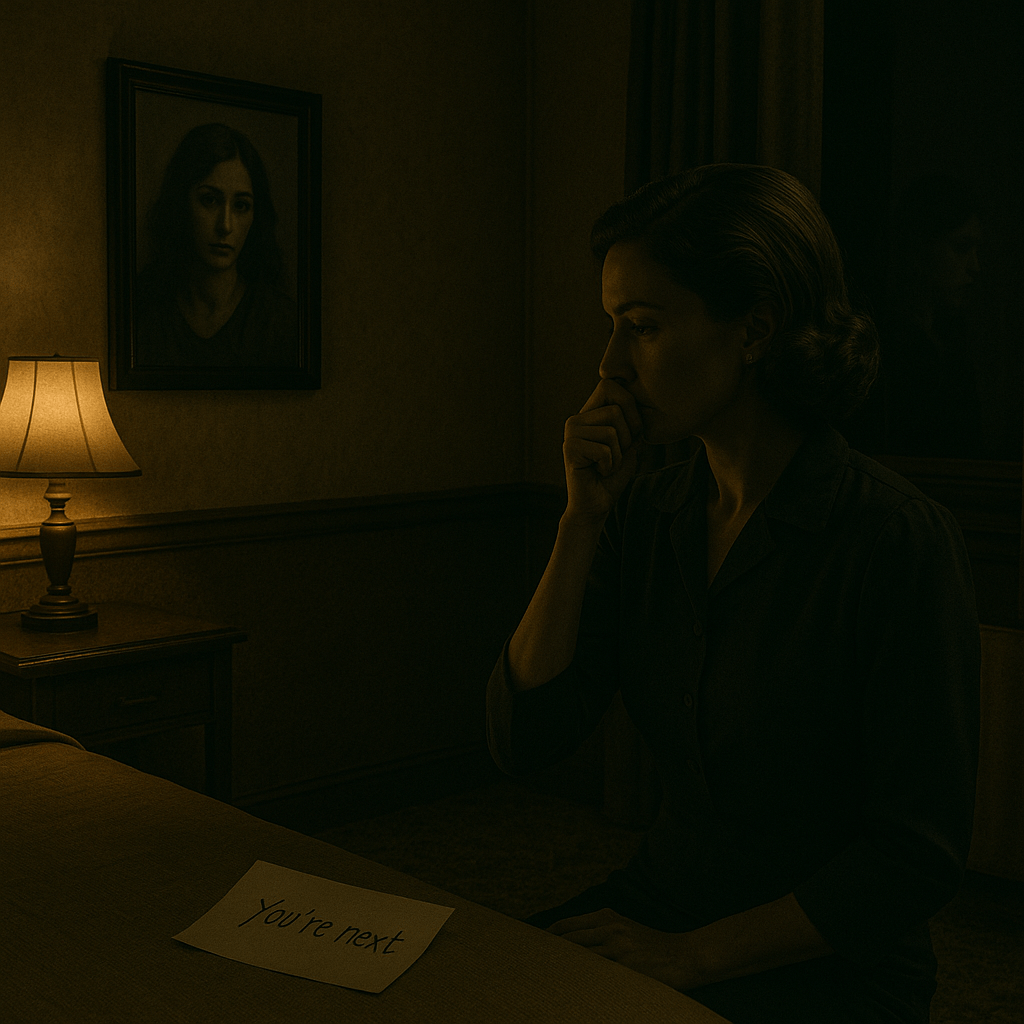
The lights of 721 were starved of electricity–the yellow light wasn’t possible to read by. A musty, old carpet reeked of cigarette smoke–Chole covered her nose with her hand. A photo of a woman caught her eye–she had grief etched in her gaze. She stared out the hotel room’s window, her thoughts flooding her dark cavern with misplaced echoes.
Exhaustion won. The intrepid journalist was far too tired to bother about the room’s habitation standards. Her head touched the pillow…and something changed.
When she woke, she wasn’t in bed. But in the photo.
Her hand, unmistakable, holding the camera. The flash must have gone off.
The camera sat on her chest when she woke, humming softly.
And a note. Fluttering loosely. “You’re next.” Was scribbled in backward ink.
She couldn’t remember penning the smudged detail…but it was hers.
Chloe grabbed the room key and stuffed her overnight clothes into her bag, hands groping everywhere. Her feet rushed her to the receptionist’s desk.
“Hi Miss, do you want a room?” The receptionist on duty was the same as the night before.
Eyes wide open, she placed the room key on the desk. The receptionist flipped it over to check the tag. “Miss, did you take the wrong key? There’s never been a Room 721.”
Chloe grabbed her bag and turned to leave—and her eyes caught sight of a Bulletin Board with photos: “Missing guests of Room 721–for archival. Do not reassign.”
Among them was one–of her. Taken years earlier, at the beach, just before the Tsunami hit.
🚪🔑🚪🔑🚪🔑🚪🔑🚪🔑🚪🔑🚪🚪🔑🚪🔑🚪🔑🚪🔑🚪🔑🚪🔑🚪🔑🚪🔑🚪🔑🚪🔑🚪
🚪🔑🚪🔑🚪🔑🚪🔑🚪🔑🚪🔑🚪🚪🔑🚪🔑🚪🔑🚪🔑🚪🔑🚪🔑🚪🔑🚪🔑🚪🔑🚪🔑🚪
If you like this story, do join me on Patreon! Buy this blog a coffee — it keeps the words flowing and the lights on! ☕Your kind donation via Paypal would be greatly appreciated!
Please find a book of my horror microfiction, Echoes in the Dark, free for download here.
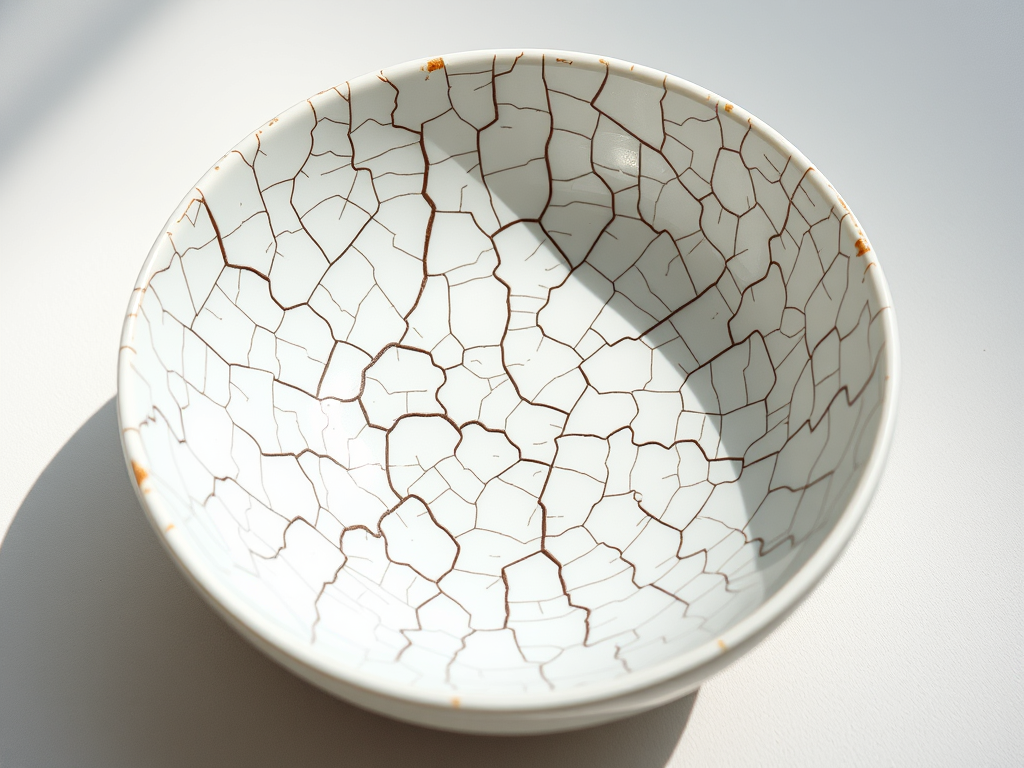
Cracked bowls are often better than polished porcelain ones.—Michelle Liew’s tattooable of the day
💔✨🍵🪄🌿💔✨🍵🪄🌿💔✨🍵🪄🌿💔✨🍵🪄🌿💔✨🍵🪄🌿💔✨🍵
Cedarvale was a suburb haven in full bloom—picture postcard perfection. Clover Wen was the idealist greeting card writer —her ‘just so’ attitude could put Marie Kondo to shame. Her kitchen towels were on rotation. Her cupboards—colour coded. And her spice rack? Alphabetized.
But the idealist had a creative secret—she was the pen behind a famous authentic lifestyle influencer.
It was her comfort zone—it was where she could chase her curated influencer dreams—everything crafted twice over—without the fear of cosmetic judgement. It was where she could hide her fear of blandness—coming out as a lifestyle influencer too ‘jigsawed’ to show herself.
But Clover’s life was a postcard lie—even hardy clovers wilted when over-watered.
Among her pastel promo drafts was a threatening note—one penned in her style, demanding that she confess her ghostwriting exploits or risk losing the utopian life she had sculpted in Cedarvale.
And so began her frantic search for mano sinistra—the evil maestro who composed the note. Perhaps it was Philomena—the cheeky handwriting analyst neighbour would pen something like that. Or her mother—the old one was lost in filters and fonts. He or she had baked clues into the thousands of drafts in what was now a crime scene—a compost pile of tattered ideas.
She filtered through the torn leaves of mental sparks—her mind an un-Cloverlike, confused warp. It was about to spin beyond control when it hit her–the mano sinistra was none other than herself. Her Breakdown—made of half-eaten cake and drafts— had penned it in a hurry, one her well-honed self was too ready to deny.
The handwriting was hers—because her porcelain finish had cracks. She had been the one yelling Mayday. The mano sinistra was herself.
And she hit a jarring note—the only way to ease the chaos in her too-right self was to publish the note. And she did. In all its messy honesty. Philomena winked her support. Her mother gave her a hug.
And her authentic lifestyle influencer gave her his blog. It turned out that cracked bowls sold better than polished porcelain ones.
Now Clover still writes—but embraces off-page scripts when they blend in.
💔✨🍵🪄🌿💔✨🍵🪄🌿💔✨🍵🪄🌿💔✨🍵🪄🌿💔✨🍵🪄🌿💔✨🍵
If you like this story, do join me on Patreon! Buy this blog a coffee — it keeps the words flowing and the lights on! ☕Your kind donation via Paypal would be greatly appreciated!
Please find a book of my horror microfiction, Echoes in the Dark, free for download here.








 The Getting Literal Writing Alcove